How Do I Check Myself For A Hernia?

how do i check myself for a hiatal hernia

Did you know that about 27% of men and 3–5.8% of women will develop a groin hernia at some point in their lives? Many hernias produce little or no pain initially, so they are often ignored.

Yet, over time, they can enlarge or trap part of the intestine, interrupting its blood supply, creating a life-threatening condition. Recognising early warning signs is critical.

This guide explains how to check yourself for a hernia and recognise early signs of groin, umbilical, hiatal, and abdominal hernias. It covers causes, risk factors, and symptoms, outlines safe hernia self-diagnosis steps, and highlights treatment and prevention options. With expert insights, it will help you understand and manage hernia effectively.

What Is a Hernia?

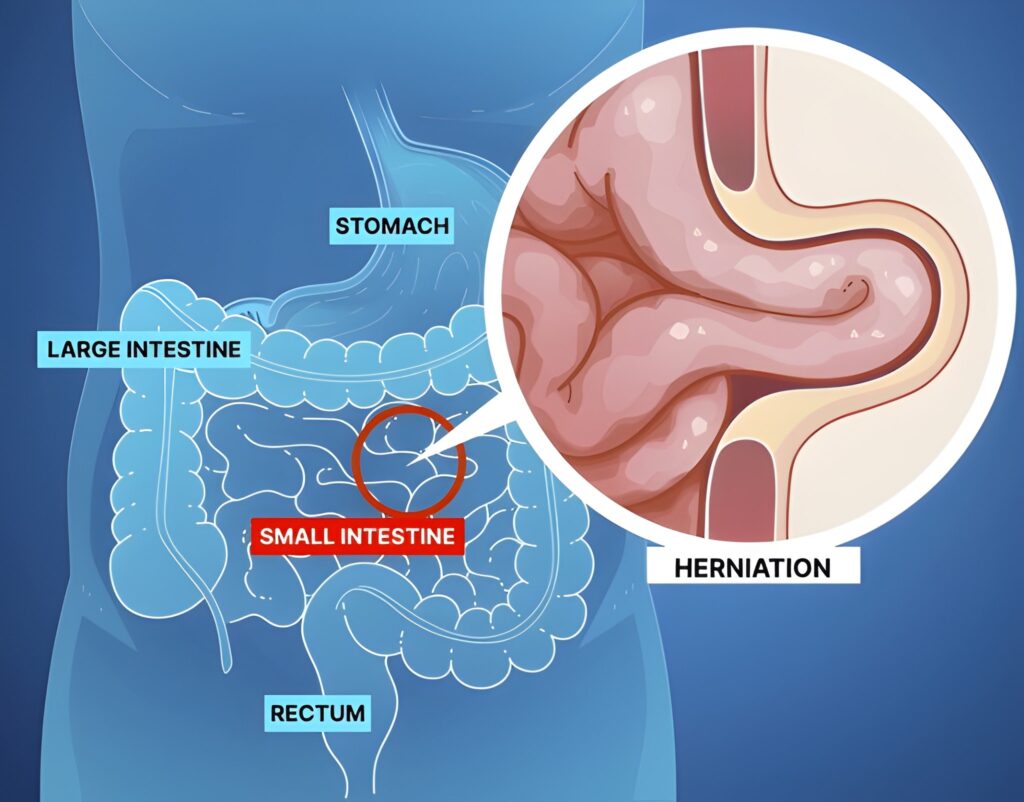
A hernia is the protrusion of an organ or segment of tissue through a weakened area or defect in the surrounding musculature or fascial layer that typically contains and supports it.

  • Often involves the small intestine or fatty tissue protruding through an opening in the abdominal wall.
  • Weaknesses may be congenital (present from birth) or develop over time due to strain, surgery, pregnancy, ageing, or raised pressure inside the abdomen.
  • Symptoms can vary from a painless lump to aching, burning, or sharp pain under strain.
  • Hernias do not resolve by themselves; untreated hernias can worsen and may lead to complications like incarceration or strangulation.
Hernia self diagnose

Types of Hernia

Inguinal Hernia

  • Accounts for the most common of all abdominal wall hernias.
  • Carries is a significant lifetime risk.
  • In males, it may extend into the scrotum; in females, it tends to be smaller but may still cause discomfort.

Femoral Hernia

  • Less common overall, more frequent in women, especially older women.
  • High risk of complications; often presents incarcerated or strangulated if not diagnosed early.

Umbilical Hernia

  • Protrusion around the belly button.
  • More common in infants, pregnancy, and with raised abdominal pressure (obesity, ascites).

Hiatal Hernia

  • An internal hernia occurs when part of the stomach pushes through the diaphragm into the chest.
  • Strongly associated with acid reflux or GORD; prevalence increases with age.

Incisional Hernia

  • It occurs along previous surgical scars. The tissue there may be weaker, especially if multiple surgeries or infections have occurred.

Ventral & Epigastric Hernias

  • A ventral hernia is present in the abdominal wall, not the groin. The epigastric ones are above the navel along the midline.

Rare & Congenital Types

  • Perineal, obturator, and congenital diaphragmatic hernias (in infants) also occur but are less common.

Causes & Risk Factors

  • Repetitive heavy lifting or constant straining (e.g., at work or in sports)
  • Chronic coughs or sneezing (smoking, COPD, allergies)
  • Obesity or rapid weight gain
  • Pregnancy and childbirth increase intra-abdominal pressure
  • Previous abdominal or pelvic surgery (scar tissue weakens the wall)
  • Ageing, which reduces muscle and connective tissue strength
  • Family history or genetic connective tissue disorders
  • Conditions causing raised abdominal pressure: constipation, ascites, urinary obstruction
 

Symptoms: Early and Late

  • Visible or palpable bulge under the skin, especially in the groin or around the stomach/umbilical region
  • Pain, dragging, burning, or aching, particularly with coughing, lifting, or standing for  long periods
  • Discomfort may lessen when lying down
  • For hiatal hernia, heartburn, acid reflux, chest pain, feeling of choking, especially after meals or lying flat
  • Late symptoms may include nausea, vomiting, obstruction, increased pain, redness, or fever over the bulge

How Do I Check Myself for a Hernia? (Self-Examination Steps)

Using hernia self diagnose techniques can help spot early signs, but a professional hernia diagnosis is essential for confirmation and safe management.

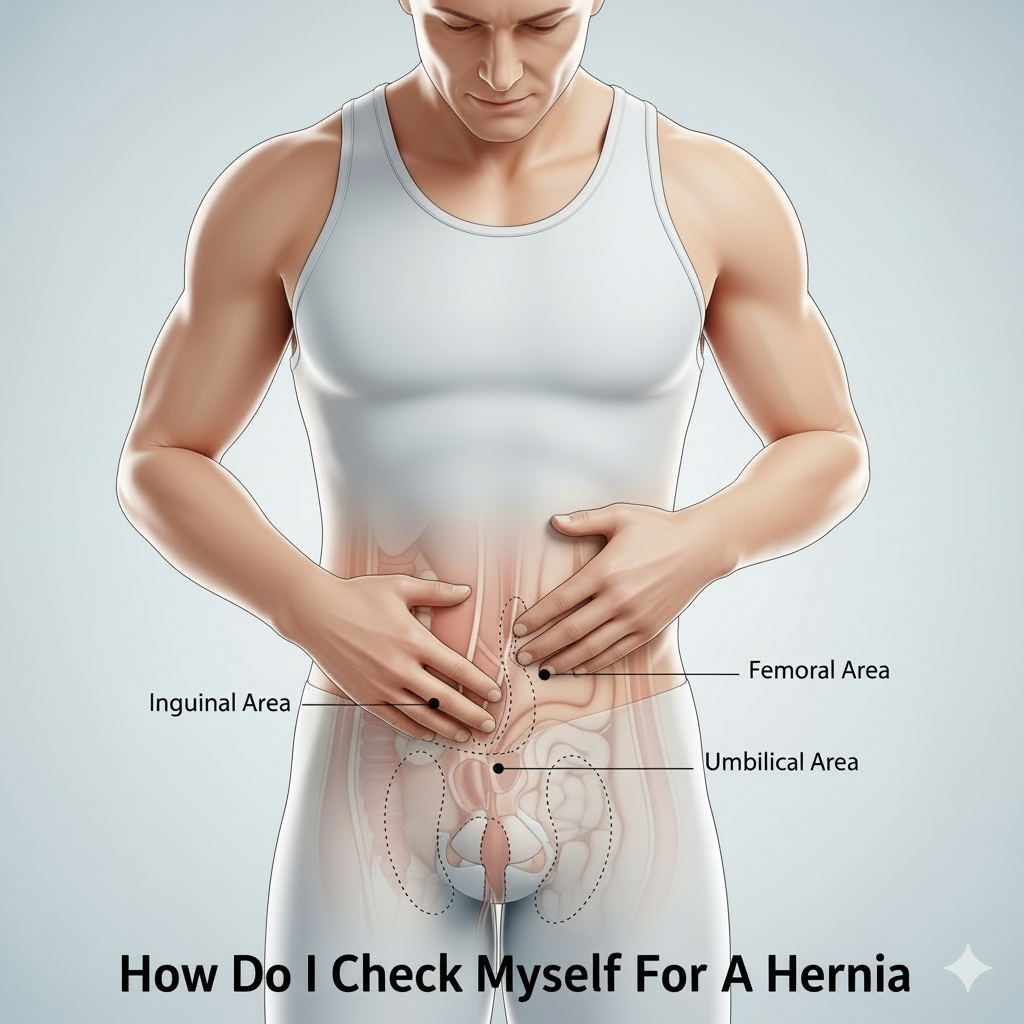
Groin (Inguinal or Femoral) Hernia

  • Stand in front of a mirror, legs slightly apart.
  • Look for a swelling in the crease between the abdomen & thigh/groin.
  • Place fingers gently over that crease; cough or bear down. If a lump appears or gets larger, suspect a hernia.
  • In males, check the inside of the scrotum for bulges. In females, check the upper inner thigh and groin crease.

Umbilical Hernia (In My Stomach)

  • Lie on your back, knees bent.
  • Use fingers around the navel, then raise head or shoulders slightly.
  • A soft bulge when the abdomen is tensed may mean an umbilical hernia.
How Do I Check Myself For A Hernia

Incisional / Ventral Hernia

  • Examine any prior surgical scars while both standing & lying down.
  • Cough lightly or strain and examine for swelling near scars or midline.

Hiatal Hernia

  • You cannot see it externally.
  • Monitor for symptoms like heartburn after meals, acid regurgitation, and chest discomfort.
  • Imaging (endoscopy, barium swallow, X-ray) is required for confirmation.

Complications to Watch For

  • Incarceration: When tissue becomes trapped and cannot be pushed back in.
  • Strangulation: It is a serious emergency. Watch for sudden intense pain, redness, and fever.
  • Bowel obstruction: Vomiting, swelling, inability to pass flatus or stool.
  • Risks rise with delays in treatment.
  • Femoral hernias are more prone to emergency complications.

Diagnosing Hernias (Medical Evaluation)

  • Physical examination by a surgeon is often sufficient.
  • Palpation while standing, coughing, or straining helps reveal groin hernias.
  • Ultrasound, CT scan, or MRI help when a hernia is not apparent (occult hernia) or in obese individuals.
  • For a hiatal hernia, endoscopy or barium swallow is used.
 

Treatment Options & Outlook

  • Minimally invasive (laparoscopic or keyhole) surgery causes less pain, faster recovery, and smaller scars.
  • Open repair is performed when the hernia is large or complex. Reinforcement with mesh may be used.
  • Prognosis is excellent if treated early. Recurrence rates are low with proper technique and post-op care.

Preventing Hernias

  • Maintain a stable, healthy weight.
  • Do safe core-strengthening exercises.
  • Avoid heavy lifting without support; use correct posture.
  • Treat chronic cough, sneezing, and constipation.
  • Stop smoking.

Why Choose Dr Samir Rahmani For Hernia Treatment?

  • Extensive Expertise: UK-trained Laparoscopic & General Surgeon, with decades of experience handling abdominal, groin, hiatal, umbilical, and incisional hernias.
  • Minimally Invasive Pioneer: Specialises in keyhole techniques (laparoscopic, robotic) that reduce recovery time, post-operative pain, and scarring.
  • Comprehensive Diagnostic Skills: Experienced in detecting occult hernias and using imaging when needed to confirm diagnosis.
  • Personalised Care: Treatment plans are tailored to your anatomy, gender, age, and lifestyle, and clear communication is prioritized.

Early Detection of Hernia Leads to Safer Outcomes

Many hernias start small, sometimes with no pain. Understanding how to check yourself for a hernia, whether groin, hiatal, or umbilical, and whether you are a male or a female, lets you act early. 

Early medical diagnosis and treatment often prevent serious complications.

If you notice a lump, pressure in the groin, persistent reflux, or any warning signs, make an appointment with Dr Samir Rahmani for a complete assessment and plan.

Prioritising prompt assessment and treatment with a trusted specialist ensures the safest hernia repair and lasting confidence in your health.

FAQs

You should look near your navel or the area of a previous scar. Tense the abdomen (lie down, lift shoulders) to make small bulges more evident.

Stand and inspect the groin area. Cough or strain; check for a bulge or discomfort in the groin crease or thigh-abdomen junction.

Since it’s internal, you won’t see a lump. Key symptoms like reflux, chest burning, or pushing up after meals must be diagnosed medically.

Male hernias (especially inguinal) may descend into the scrotum. They should be checked and palpated inside the scrotum and groin region for self-diagnosis.

Women must pay attention to the upper thigh/groin crease, especially when symptoms are like discomfort rather than a visible bulge.

Press or feel around the belly button while tensing your belly (lifting shoulders or standing). A bulge or protrusion may indicate a hernia.

No. In adults, hernias do not repair themselves. Without treatment, they tend to worsen; only small umbilical hernias in infants might spontaneously close.

MORE ARTICLES