
Mounjaro and Your Organs: Thyroid, Kidney, Eye, and Liver Side Effects Explained
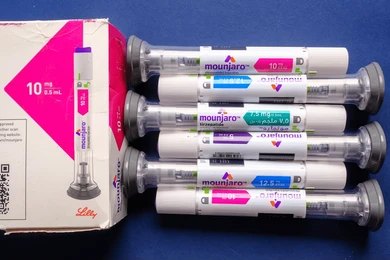
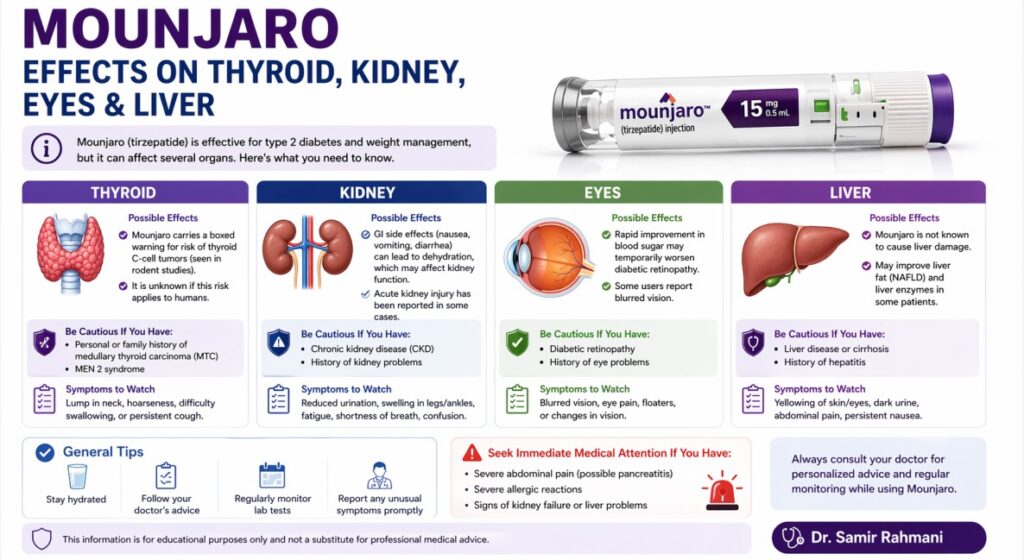
Mounjaro can affect several organ systems. Thyroid: carries a boxed warning for thyroid C-cell tumors based on animal studies; avoid if history of medullary thyroid cancer or MEN 2. Kidneys: risk primarily through dehydration from GI side effects; monitor closely in patients with kidney disease. Eyes: diabetic retinopathy may temporarily worsen with rapid blood sugar changes. Liver: rare elevations in liver enzymes reported; routine monitoring not typically required for most patients.
As a bariatric surgeon in Dubai, I ensure all my patients understand these organ-specific considerations before starting Mounjaro treatment.
Mounjaro Side Effects Thyroid: Understanding the Warnings
The Thyroid C-Cell Tumor Warning
Mounjaro carries the most serious FDA warning level (boxed warning) regarding thyroid C-cell tumors. This is based on findings in rodent studies where tirzepatide caused thyroid tumors.
Key facts about Mounjaro and thyroid:
Animal studies showed thyroid C-cell tumors in rodents at all doses tested
Rodents are known to be particularly susceptible to these tumors from GLP-1 drugs
No thyroid tumors have been attributed to Mounjaro in human clinical trials
The relevance of rodent findings to humans remains unknown
Similar warnings exist for all GLP-1 receptor agonist medications
Who Should Not Take Mounjaro Due to Thyroid Concerns
Personal history of medullary thyroid carcinoma (MTC)
Family history of MTC (parents, siblings, children)
Multiple Endocrine Neoplasia syndrome type 2 (MEN 2)
Unexplained thyroid nodules are being evaluated
Elevated calcitonin levels of unknown cause
Mounjaro and Thyroid Nodules
If you have thyroid nodules, discuss this with your doctor before starting Mounjaro. Pre-existing nodules require evaluation to rule out medullary thyroid carcinoma before treatment begins.
Warning signs to monitor:
New lump or swelling in the neck
Difficulty swallowing
Shortness of breath
Persistent hoarseness or voice changes
If you develop any of these symptoms during treatment, stop Mounjaro and contact your healthcare provider immediately.
Mounjaro and Kidney Disease: Safety Considerations
Does Mounjaro Affect Kidneys?
Mounjaro can affect kidney function, primarily through indirect mechanisms rather than direct kidney toxicity.
How Mounjaro may affect the kidneys:
Dehydration from vomiting or diarrhea reduces kidney blood flow
Reduced fluid intake due to appetite suppression can cause dehydration
Acute kidney injury has been reported in cases of severe GI side effects
Pre-existing kidney disease may worsen if dehydration occurs
Mounjaro Kidney Pain: When to Be Concerned
Back or flank pain during Mounjaro treatment warrants medical evaluation. Possible causes include:
Dehydration affects kidney function
Kidney stones (more common with rapid weight loss)
Referred pain from GI issues
Unrelated kidney conditions
Seek medical attention for:
Persistent back or flank pain
Blood in urine
Significant decrease in urination
Signs of severe dehydration
Using Mounjaro with Kidney Disease
Patients with pre-existing kidney disease can often still use Mounjaro with careful monitoring:
More frequent kidney function blood tests may be needed
Extra attention to hydration is essential
Slower dose titration may be recommended
Close communication with your nephrologist is important
Lower target doses may be appropriate
Mounjaro Eye Side Effects: Vision Concerns
Does Mounjaro Cause Blurry Vision?
Some patients report blurry vision while taking Mounjaro. This can have several causes:
Rapid blood sugar changes (especially in diabetics) affect lens shape
Dehydration can affect the tear film and vision clarity
Pre-existing diabetic retinopathy may temporarily worsen
Unrelated vision changes that coincide with treatment
Mounjaro and Diabetic Retinopathy
For diabetic patients, rapid improvement in blood sugar control can paradoxically worsen diabetic retinopathy temporarily. This is known as “early worsening” and is related to the metabolic changes, not the medication itself.
Recommendations for diabetic patients:
Have a comprehensive eye exam before starting Mounjaro
Inform your ophthalmologist that you are taking Mounjaro
Schedule regular eye exams during treatment (every 6-12 months)
Report any vision changes immediately
More gradual blood sugar improvement may be recommended in some cases
When Vision Changes Require Immediate Attention
Seek urgent eye care for:
Sudden vision loss or significant vision change
New floaters or flashes of light
Curtain-like shadow over your vision
Severe eye pain
Halos around lights
Mounjaro and Liver Function
Does Mounjaro Affect the Liver?
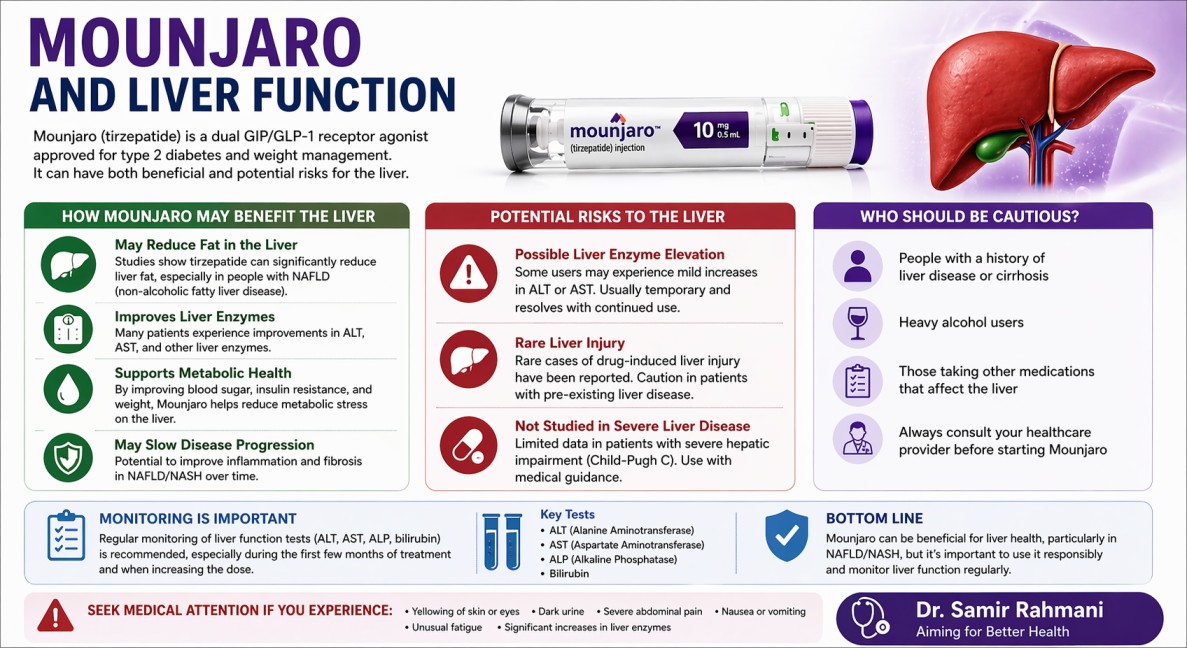
Liver effects from Mounjaro are rare and generally not a major concern for most patients.
What the data shows:
Mild liver enzyme elevations occurred in some clinical trial participants
Severe liver injury is very rare
Routine liver monitoring is not typically required
Existing fatty liver disease may actually improve with weight loss
Symptoms of Liver Problems
Contact your healthcare provider if you experience:
Yellowing of skin or eyes (jaundice)
Dark urine
Persistent fatigue
Right upper abdominal pain
Nausea that is different from typical GI side effects
Mounjaro for Patients with Fatty Liver Disease
Many patients seeking weight loss with Mounjaro have non-alcoholic fatty liver disease (NAFLD). The good news is that weight loss from Mounjaro can actually improve fatty liver:
Weight loss of 7-10% can significantly reduce liver fat
GLP-1 medications may have direct beneficial effects on the liver
Clinical trials showed improvement in liver enzyme levels
Ongoing research is studying GLP-1 drugs specifically for fatty liver
Other Organ Considerations
Mounjaro and Heart
Mounjaro appears to have cardiovascular benefits rather than risks:
Clinical trials showed a reduction in cardiovascular risk factors
Blood pressure often improves with weight loss
Cholesterol levels typically improve
Ongoing studies are evaluating cardiovascular outcomes
Some patients notice heart rate changes (usually a mild increase)
Mounjaro and Gallbladder
Gallbladder issues are an important consideration with Mounjaro:
Rapid weight loss increases the risk of gallstone formation
GLP-1 medications may independently affect gallbladder function
Gallstones occurred in 2-3% of clinical trial participants
Symptoms include right upper abdominal pain, especially after fatty meals
Some patients may require gallbladder removal
Concerned About Organ-Specific Side Effects?
Dr. Samir Rahmani provides a thorough pre-treatment evaluation and ongoing monitoring to ensure Mounjaro is safe for you. Our comprehensive approach addresses all your health concerns.
Conclusion: Understanding Mounjaro’s Impact on Thyroid, Kidney, Eye, and Liver Health
Understanding mounjaro side effects thyroid, mounjaro and kidney disease, mounjaro eye side effects, and mounjaro liver side effects is essential for making informed decisions before starting treatment. While Mounjaro can affect multiple organ systems, most risks are manageable when the medication is used under proper medical supervision and with regular monitoring.
Concerns such as thyroid warnings, kidney function changes due to dehydration, temporary vision disturbances, and rare liver-related effects should not be ignored but also need to be viewed in the context of overall benefits. For many patients, especially those aiming for weight loss and improved metabolic health, the benefits of treatment often outweigh the potential risks when managed correctly.
The key is personalised care. Every patient’s medical history, existing conditions, and risk factors must be carefully evaluated before and during treatment. With the right approach, these organ-related concerns can be monitored, prevented, or managed effectively.
For safe and personalised treatment, consult Dr. Samir Rahmani, who provides evidence-based guidance and ongoing monitoring to help minimise risks and ensure optimal outcomes with Mounjaro.

About the author
Dr. Samir Rahmani
FRCS (England)
CCT General Surgery (UK)
MD — University of Leeds
MSc Surgery — University of Hull
24+ years experience
5,000+ procedures
Dr. Samir Rahmani is a UK-trained consultant surgeon with 27+ years of experience in bariatric, gastrointestinal, and metabolic health management. He completed advanced surgical training in the UK and previously served at Aneurin Bevan University Health Board (NHS Wales).
He holds an MD in Surgery from the University of Leeds and is JAG-accredited in GI endoscopy. Currently practicing in the UAE, he provides evidence-based guidance on weight loss treatments, including medications like Mounjaro (tirzepatide), with a focus on monitoring organ-related side effects involving the thyroid, kidneys, eyes, and liver to ensure safe and personalised care.
Frequently Asked Questions: Mounjaro Organ Effects
Your healthcare provider may recommend thyroid evaluation, especially if you have risk factors. This typically includes a physical exam of your neck and possibly blood tests. If you have thyroid nodules, they should be evaluated before starting treatment.
Permanent kidney damage from Mounjaro is rare and usually related to severe, untreated dehydration. Most kidney effects are reversible with proper hydration and management of GI side effects. Patients with pre-existing kidney disease should be monitored more closely.
Rapid blood sugar improvement can temporarily worsen diabetic retinopathy in some patients. This is related to the metabolic changes, not the medication specifically. Regular eye exams and communication with your ophthalmologist are important during treatment.
In most cases, Mounjaro is not only safe but potentially beneficial for fatty liver disease. Weight loss from treatment can significantly reduce liver fat and improve liver enzyme levels. Discuss your specific situation with your healthcare provider.
Monitoring frequency depends on your individual health status. Patients with pre-existing conditions may need more frequent testing. Generally, routine blood work every 3-6 months is sufficient for most patients. Your healthcare provider will determine the appropriate monitoring schedule.
Medical Disclaimer
This article is for informational purposes only and is not a substitute for professional medical advice, diagnosis, or treatment. Always seek the advice of a qualified health provider with any questions you may have regarding a medical condition.
Medically reviewed by Dr. Samir Rahmani.
MORE ARTICLES
Mounjaro and Your Organs: Thyroid, Kidney, Eye, and Liver Side...Read More
Mounjaro Side Effects by Dose: What to Expect at Every...Read More
Mounjaro Long-Term Side Effects: Cancer Risk, Safety Concerns, and What...Read More
Mounjaro Diarrhea, Constipation, and Stomach Pain: Complete GI Side Effects...Read More