Back pain is one of the most common reasons people seek medical care. While most associate it with poor posture, muscular strain, or spinal issues, few consider that digestive conditions like a hiatal hernia can also trigger back discomfort. But can a hiatal hernia cause back pain?
The answer is yes—hiatal hernias can lead to back pain, though the connection isn’t always straightforward. In this article, we’ll explore how a hiatal hernia might be linked to back discomfort, especially upper back pain, and when to see a specialist like Dr. Samir Rahmani, a leading UK trained consultant bariatric, laparoscopic, and general surgeon in Dubai.
What Is a Hiatal Hernia?
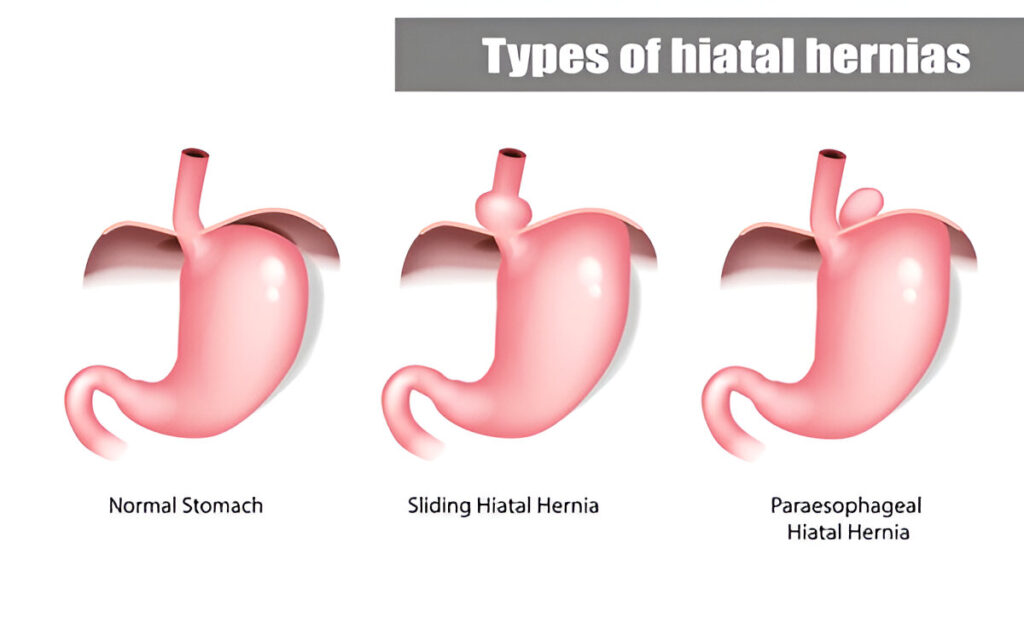
A hiatal hernia occurs when part of the stomach pushes through the diaphragm into the chest cavity. This happens through an opening in the diaphragm called the hiatus—hence the name “hiatal” hernia.
There are two main types:
Sliding hiatal hernia: The stomach and lower esophagus slide up into the chest.
Paraesophageal hernia: Part of the stomach pushes through the hiatus and sits next to the esophagus. This type is less common but may pose more risk.
Most small hiatal hernias are asymptomatic. However, larger hernias or paraesophageal hernias can cause noticeable symptoms—including back pain.
Many patients with hiatal hernias report pain in the upper back or between the shoulder blades. This discomfort can be dull and persistent or sharp and stabbing, especially after eating or lying down. So, while hiatal hernia back pain isn’t the most common symptom, it’s certainly one that affects many.
Why Does a Hiatal Hernia Cause Back Pain?
The pain is often referred pain, meaning it doesn’t originate from the back itself but is perceived there due to the way nerves communicate. A hiatal hernia can irritate the diaphragm, esophagus, or nearby organs, which may trigger pain that radiates into the back.
Common ways back pain occurs:
Hiatal hernia and back pain: As the stomach bulges upward, it places pressure on nearby tissues and nerves.
Hiatal hernia pain in back: Especially after meals or when lying flat, pressure increases.
Hiatal hernia upper back pain: The hernia may affect structures near the upper spine or thoracic region.
Hiatal hernia pain radiating to back: Pain from the esophagus or diaphragm can be felt in the back due to shared nerve pathways.
Other Digestive Hernias and Back Pain
While the focus is on hiatal hernias, it’s worth noting that other abdominal hernias can also cause back discomfort:
Paraesophageal hernia back pain: Often more painful than a sliding hernia due to its size and possible strangulation risks.
Can a hernia cause back pain in females?: Yes. Women may be more sensitive to abdominal pressure or digestive changes.
Can stomach or abdominal hernias cause back pain?: Yes. Especially when large or inflamed.
Does a hernia cause back pain?: In general, hernias that interfere with surrounding muscles or nerves may lead to back pain.
Additional Symptoms That May Occur
A hiatal hernia doesn’t always cause symptoms. But when it does, back pain may appear alongside:
Chest pain or tightness
Difficulty swallowing
Acid reflux or heartburn
Shortness of breath
A sensation of fullness
Burping or bloating
Some patients experience hiatal hernia weird symptoms—like back pain with no obvious gastrointestinal signs. This can delay diagnosis.
Can a Hiatal Hernia Cause Pain in the Middle of the Back?
Yes. Although less common, pain can localize in the middle back area. This is especially true when the hernia causes severe acid reflux or esophageal spasms, which can radiate through the chest and into the back.
Back Pain After Hiatal Hernia Surgery
Postoperative back pain can occur after hernia repair. This may result from:
Muscle strain during recovery
Nerve irritation from laparoscopic instruments
Referred pain from internal healing
This discomfort is usually temporary, but it’s important to monitor symptoms and report persistent pain to your surgeon.
If you’re experiencing unexplained back pain, particularly if it worsens after eating, lying down, or is accompanied by heartburn or chest pressure, a hiatal hernia could be the cause.
Dr. Samir Rahmani is a highly experienced bariatric, laparoscopic and general surgeon in Dubai, with special expertise in diagnosing and treating hiatal hernias.
Final Thoughts
While not commonly the first symptom that comes to mind, back pain from a hiatal hernia is very real for many patients. If you’re experiencing persistent upper back discomfort, especially alongside digestive symptoms, don’t ignore it.
Early diagnosis and expert care can significantly improve your quality of life—especially when guided by a trusted specialist like Dr. Samir Rahmani in Dubai. A highly respected, UK-trained consultant, Dr. Rahmani specializes in bariatric, laparoscopic, and general surgery. With years of international experience and advanced surgical expertise, he is exceptionally skilled in managing complex hernia cases, including hiatal and paraesophageal hernias. Whether you’re seeking a precise diagnosis or a tailored treatment approach, Dr. Rahmani delivers care that is grounded in clinical excellence, compassion, and global standards of practice..