
H. Pylori Symptoms: Early Warning Signs You Should Never Ignore
By Dr. Samir Rahmani, FRCS (England), UK-Trained Laparoscopic, Bariatric & GI Surgeon, Dubai | Medically Reviewed: March 2026

The human body is incredibly vocal, though its messages are often delivered in whispers rather than shouts. When it comes to the stomach, we tend to dismiss minor gripes—a bit of bloating after a heavy meal, a fleeting bout of nausea, or a sharp burp—as the price of a busy lifestyle. But for millions of people globally, these aren’t just digestive “hiccups”; they are the symptoms of h pylori at work, and often the earliest h pylori symptom many people overlook.
Helicobacter pylori (H. pylori) is a quiet colonizer. It doesn’t usually cause a dramatic, sudden illness. Instead, it burrows into the mucosal lining of your stomach, slowly weakening your defenses against gastric acid. Because the signs of h pylori can be so subtle, many people live with the infection for years, unaware that the dull ache they feel in the middle of the night is actually an early warning sign of a more serious h pylori infection symptoms.
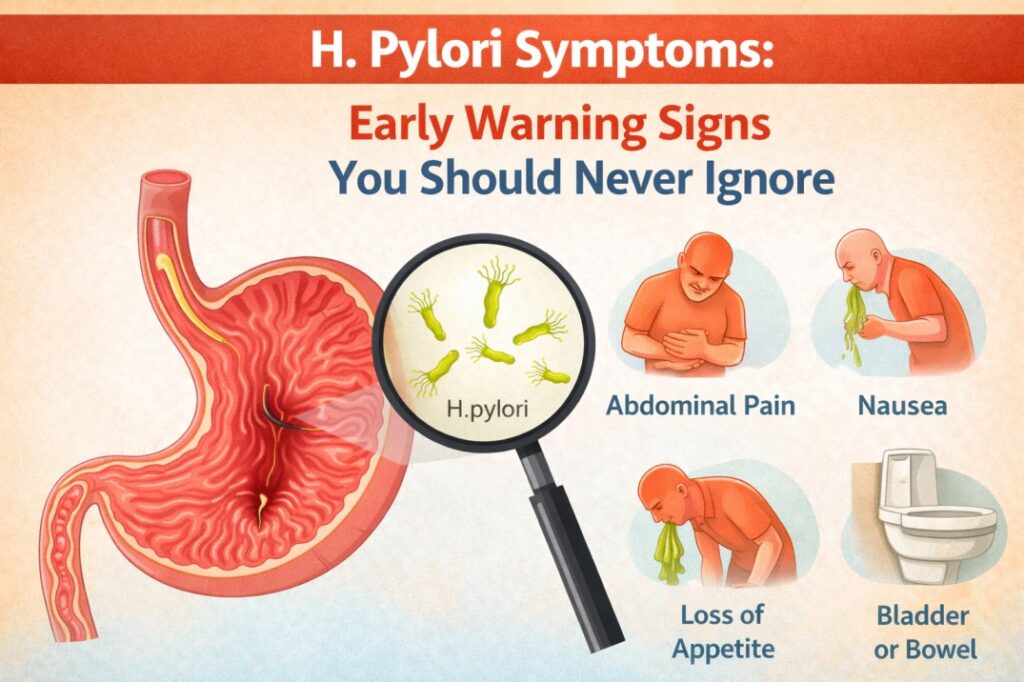
In clinical settings, Dr. Samir Rahmani often notes that the most dangerous aspect of this bacteria is how “normal” it can feel. By the time a patient seeks help, the infection has often progressed from simple irritation to chronic gastritis or even an ulcer. Recognizing what are the first symptoms of h pylori is vital for preventing long-term damage and ensuring a smoother recovery path.
The Subtle Start: What Are the First Symptoms of H. Pylori?
In the early stages, the symptoms of h pylori infection often mimic common indigestion. You might find yourself reaching for antacids more frequently or noticing that certain foods “hit different” than they used to.
The Classic “Empty Stomach” Pain
The hallmark sign is a dull or burning sensation in the upper abdomen (the epigastric area). This pain is unique because it follows a specific rhythm:
It often strikes when the stomach is empty, such as between meals or in the early hours of the morning.
It can last for a few minutes or several hours.
It typically improves—temporarily—after eating a small snack or taking an acid-neutralizing medication.
While this burning is one of the most common symptoms of helicobacter pylori, it is frequently ignored. We tell ourselves it’s just hunger or a bit of “acidity,” but when this sensation becomes a weekly or nightly occurrence, it is time for a professional evaluation.
Understanding the "Silent" Signs: From Bloating to Breath
Beyond the typical stomach ache, there are several secondary signs of h pylori that patients often fail to connect to a bacterial infection.
H. Pylori Bloating and Burping
One of the most persistent complaints is h pylori bloating. This isn’t just the feeling of being full; it’s an uncomfortable, distended sensation in the upper belly that often occurs shortly after eating even a small amount. This is frequently accompanied by excessive h pylori burping (belching). These symptoms occur because the bacteria interfere with the stomach’s ability to process food efficiently, leading to trapped gas and pressure.
The Mystery of H. Pylori Bad Breath
Can a stomach bug affect your breath? Surprisingly, yes. H pylori bad breath (halitosis) is a documented symptom. The bacteria produce an enzyme called urease, which creates ammonia to neutralize stomach acid. This chemical byproduct, combined with the gases produced by chronic gastritis, can travel up the esophagus and manifest as persistent bad breath that doesn’t resolve with brushing or mouthwash.
Throat and Reflux Symptoms
Many patients report h pylori throat symptoms, often describing a “foreign body” sensation or a chronic dry cough. This is usually linked to h pylori acid reflux. As the bacteria weaken the stomach lining, the resulting inflammation can trigger or worsen gastroesophageal reflux, sending irritating acid up toward the throat.
Who is Affected from H. Pylori ? Symptoms Across Different Groups
While the core helicobacter pylori symptoms remain similar, the way they manifest can vary significantly based on age and gender.
Symptoms of H. Pylori in Females
In women, digestive issues are sometimes misattributed to hormonal shifts or stress. However, symptoms of h pylori in females can occasionally include more pronounced nausea and a higher incidence of iron-deficiency anemia. If you are experiencing unexplained fatigue alongside chronic bloating, it may be due to the bacteria causing micro-bleeding in the stomach lining, leading to low iron levels.
H. Pylori Symptoms in Kids
In children, the signs are often less specific. H pylori symptoms in kids might look like:
Refusal to eat or “picky” eating due to low-grade nausea.
Frequent complaints of a “tummy ache” around the belly button.
Unexplained vomiting.
Slow growth or poor weight gain.
Because children can’t always articulate the “burning” sensation adults feel, parents should look for changes in energy levels and appetite. Dr. Samir Rahmani stresses that early screening in children is essential to prevent the infection from becoming a lifelong burden.
H. Pylori in Adults
For most symptoms of h pylori in adults, the progression is slow. You might notice uncommon symptoms of h pylori like a metallic taste in the mouth, or even h pylori back pain. While the infection is in the stomach, severe inflammation or a developing ulcer can cause referred pain that radiates to the mid-back, often confusing patients into thinking they have a musculoskeletal issue.
What Does H. Pylori Poop Look Like? The Red Flags
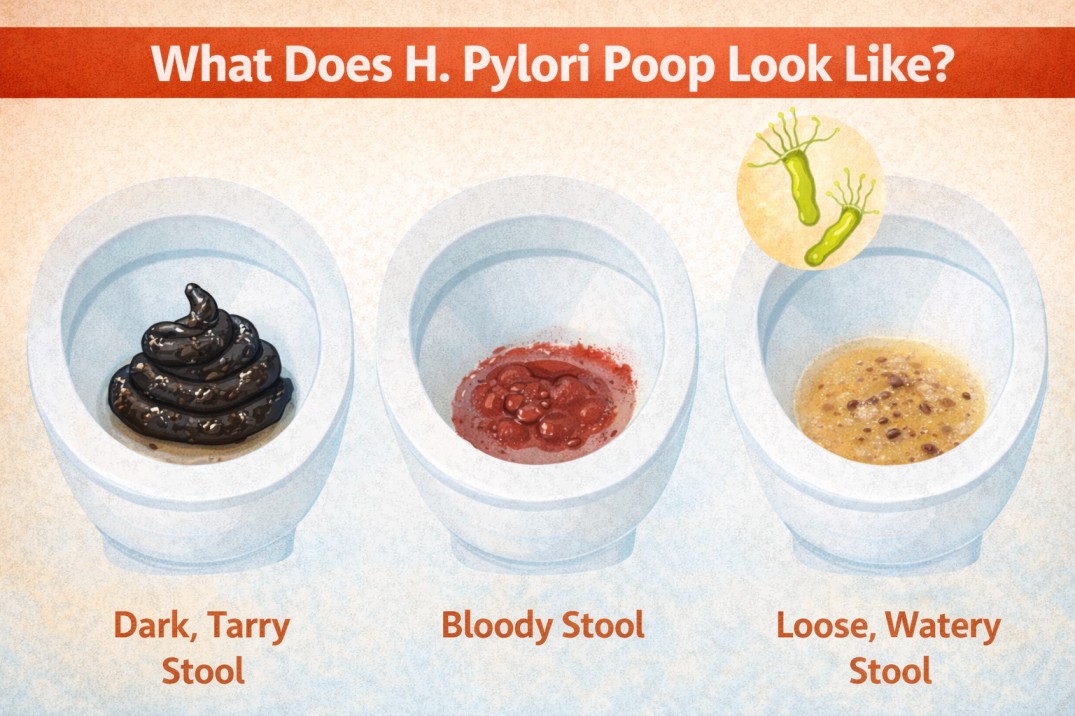
It’s an uncomfortable topic, but your stool is one of the most honest indicators of your internal health. When patients ask what does h pylori poop looks like, they are usually looking for signs of a bleeding ulcer.
Stool Color and Consistency
In a standard h pylori infection, your stool might look completely normal. However, if the bacteria have caused a peptic ulcer that is bleeding, you will see a significant change:
- Black Stool: Also known as melena, this is stool that looks dark, black, and tarry (like coal or coffee grounds). This happens when blood is digested as it passes through the GI tract.
- Tarry Stool: If the stool has a sticky, thick consistency, it is a sign of “old” blood and is considered a medical emergency.
- H. Pylori Diarrhea: While less common than constipation or normal stool, some patients experience loose, urgent stools as the body reacts to the bacterial imbalance and inflammation.
If you notice black stool and stomach pain, do not wait. This combination indicates that the stomach lining has been breached, and immediate medical attention from a specialist like Dr. Samir Rahmani is required to stop the bleeding.
Weight Fluctuations: H. Pylori Weight Loss vs. Weight Gain
The relationship between H. pylori and weight is complex. Most commonly, people experience h pylori weight loss because the persistent nausea and “early satiety” (feeling full too quickly) lead them to eat less.
Conversely, some patients report h pylori weight gain. This is often an indirect effect; people may eat small amounts of bland, starchy foods more frequently to “soak up” the burning acid and find temporary relief from the pain. Additionally, successful treatment of the infection can sometimes lead to weight gain as the appetite returns and the body begins absorbing nutrients more efficiently.
When to Seek Medical Evaluation for H. Pylori
It is easy to normalize a “sensitive stomach,” but chronic symptoms of h pylori are not something to “tough out.” You should consider an h pylori test if:
You have a dull, burning pain in the upper abdomen that has lasted for more than two weeks.
You find yourself relying on antacids daily.
You have a family history of stomach cancer or peptic ulcers.
You are experiencing unexplained fatigue or have been diagnosed with iron-deficiency anemia.
Dr. Samir Rahmani utilizes highly accurate, non-invasive diagnostic tools—such as the Urea Breath Test or Stool Antigen Test—to confirm the presence of the bacteria before designing a personalized eradication plan.
Final Thoughts: Listen to Your Gut
Digestive health is the cornerstone of overall well-being. When we ignore the signs of h pylori, we allow a small, treatable infection to potentially turn into a lifelong health challenge. Whether it’s the persistent h pylori bloating that makes you uncomfortable after every meal or a more serious warning like black stool, these symptoms are your body’s way of asking for help.
Dr. Samir Rahmani provides a supportive, expert environment for those seeking to clear the fog of digestive discomfort. Through precise testing and ethical, evidence-based treatment, the goal is not just to eliminate the bacteria, but to restore the peace and balance your digestive system deserves.

About the author
Dr. Samir Rahmani
FRCS (England)
CCT General Surgery (UK)
MD — University of Leeds
MSc Surgery — University of Hull
27+ years experience
5,000+ procedures
Dr. Samir Rahmani is a UK-trained consultant surgeon with 27+ years of experience in bariatric, gastrointestinal, and metabolic health management. He completed advanced surgical training in the UK and previously served at Aneurin Bevan University Health Board (NHS Wales).
He holds an MD in Surgery from the University of Leeds and is JAG-accredited in GI endoscopy. Currently practicing in the UAE, he provides evidence-based guidance on weight loss treatments, including medications like Mounjaro (tirzepatide), with a focus on monitoring organ-related side effects involving the thyroid, kidneys, eyes, and liver to ensure safe and personalised care.
Frequently Asked Questions (FAQs)
While not a primary symptom, some patients report tongue h pylori symptoms like a white or yellowish coating. This is often due to an imbalance in the oral microbiome or secondary acid reflux caused by the infection.
H pylori back pain is considered an “uncommon” or referred symptom. It usually occurs when a stomach ulcer is irritating the nerves near the back of the abdominal cavity. If you have stomach pain that radiates to your back, it requires a prompt medical check-up.
Look for h pylori symptoms in kids like frequent nausea, vomiting, or a general lack of interest in food. Unlike adults, children may not describe a “burning” sensation and may instead just seem irritable or tired.
It can cause both. While many people have normal bowel movements, the inflammation from the infection can lead to h pylori diarrhea in some, while others might experience constipation due to changes in diet or medication use.
The bacteria produce ammonia and other gases to survive the stomach’s acid. These gases can be exhaled, leading to h pylori bad breath that doesn’t go away with typical dental care.
Black stool and stomach pain are significant red flags for a bleeding ulcer. If your stool is dark and tarry, seek medical help immediately, as this can lead to severe anemia or internal complications.
Yes, h pylori throat symptoms are often a result of silent acid reflux. The bacteria-induced inflammation in the stomach can cause acid to splash back up into the esophagus, irritating the throat.
Not always. Some people only experience bloating or a dull ache. However, h pylori nausea is a very frequent complaint, particularly in the morning or when the stomach is empty.
Yes. The pain often moves in cycles—lasting for a few days or weeks and then disappearing for a while, only to return later. This cyclic nature often leads people to believe the problem has “healed” on its own.
Sometimes h pylori acid reflux can cause a burning sensation in the chest that mimics heartburn. It is important to distinguish this from heart-related pain; a gastroenterologist like Dr. Samir Rahmani can help differentiate these symptoms.
Chronic, untreated helicobacter pylori symptoms are a known risk factor for stomach cancer. However, with early detection and successful eradication, this risk is significantly reduced.
There is no single “first” sign, but many people look back and realize that what are the first symptoms of h pylori for them were frequent burping and a slight, nagging discomfort after meals.
Yes, the bacteria can be spread through saliva (kissing) or shared utensils. If one person in a household has symptoms of h pylori infection, it is common for other family members to be carriers as well.
Most describe it as a “gnawing” or “burning” sensation, almost like a localized hunger pang that won’t go away even after the stomach should be full.
Yes. Chronic infection can lead to iron-deficiency anemia due to small amounts of internal bleeding, which results in persistent fatigue and weakness.
Medical Disclaimer
This article is for informational purposes only and is not a substitute for professional medical advice, diagnosis, or treatment. Always seek the advice of a qualified health provider with any questions you may have regarding a medical condition.
Medically reviewed by Dr. Samir Rahmani.


