
How to Test for H. Pylori: Breath, Stool & Endoscopy Options
By Dr. Samir Rahmani, FRCS (England), UK-Trained Laparoscopic, Bariatric & GI Surgeon, Dubai | Medically Reviewed: March 2026
When you are dealing with a persistent, gnawing ache in your upper abdomen or bloating that won’t quit, the path to feeling better starts with a single question: Is Helicobacter pylori (H. pylori) the culprit? Getting a definitive answer isn’t just about curiosity; it’s about preventing chronic gastritis and ulcers. But for many patients, the sheer variety of diagnostic options—from breathing into a bag to undergoing an endoscopy—can feel overwhelming.
In my experience working with patients, the most important thing to understand is that not every h pylori test is created equal. Some are better for a first-time diagnosis, while others are essential for confirming that the bacteria are truly gone after treatment. Choosing the right one involves a conversation about your symptoms, your medical history, and—most importantly—what medications you’ve taken recently. Dr. Samir Rahmani often emphasizes that the “best” test is the one that provides the most accurate result for your specific situation.
The Gold Standard: The H. Pylori Breath Test
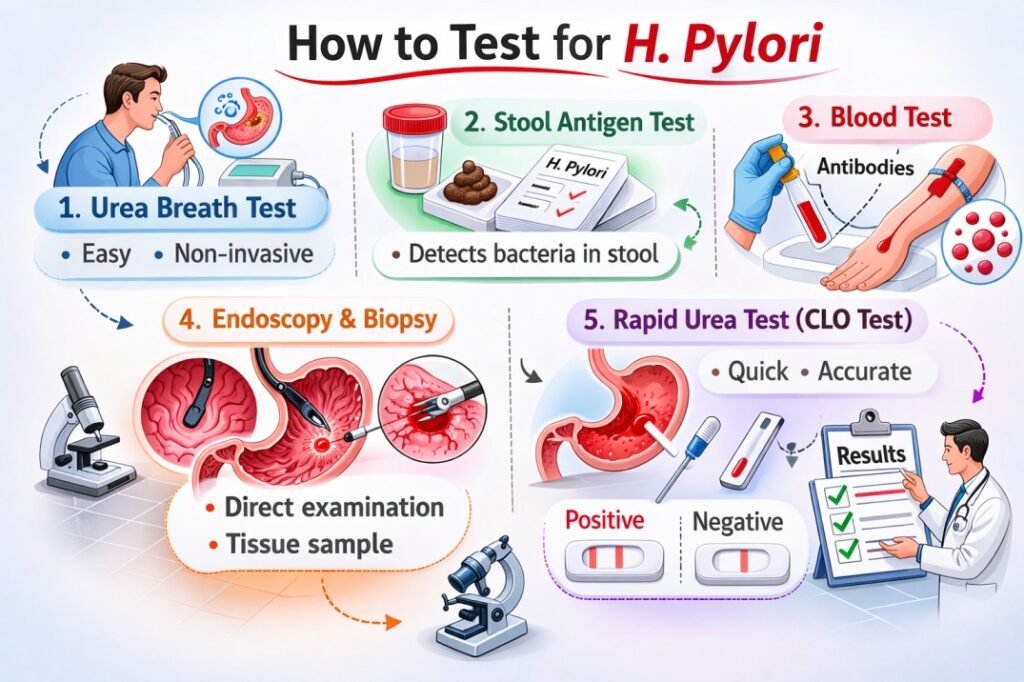
If you ask a specialist how to test for h pylori non-invasively, the urea breath test (UBT) is almost always the first recommendation. It is highly accurate, often exceeding 95% sensitivity and specificity, and it is remarkably simple for the patient.
What is H. Pylori Breath Test?
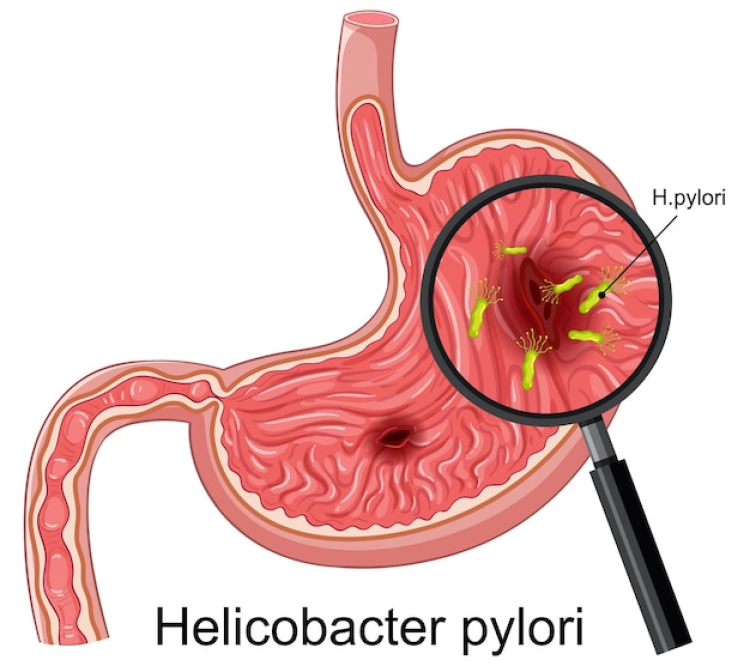
The science behind it is fascinating. H. pylori survives the stomach’s acid by producing an enzyme called urease, which breaks down urea into ammonia and carbon dioxide. In this test, you swallow a special capsule or liquid containing a “tagged” carbon atom. If the bacteria are present, they break down that urea, and you eventually exhale the tagged carbon.
The Procedure:
-
You provide an initial “baseline” breath sample.
-
You drink a small amount of a lemon-flavored solution or swallow a capsule.
-
After about 10 to 20 minutes, you blow into a second collection bag.
-
The lab compares the two samples to see if the tagged carbon is present.
The Practical Alternative: H. Pylori Stool Test
The stool test for h pylori (also known as the Stool Antigen Test) is another highly reliable, non-invasive option. While perhaps a bit more “manual” for the patient, it is often the preferred h pylori test for children and is excellent for follow-up.
Unlike a blood test, which looks for the body’s reaction to the bacteria, the h pylori stool test looks for the bacteria themselves. This makes it a very accurate way to determine if there is an active infection currently living in your gut.
Pros: Highly accurate, doesn’t require a clinic visit for the collection (you can do it at home), and relatively inexpensive.
Cons: Requires handling a stool sample, which some patients find unpleasant.
Dr. Samir Rahmani frequently uses this test to confirm eradication. If the test comes back negative four weeks after you’ve finished your antibiotics, we can be confident the treatment worked.
The Blood Test: A Useful but Limited Tool
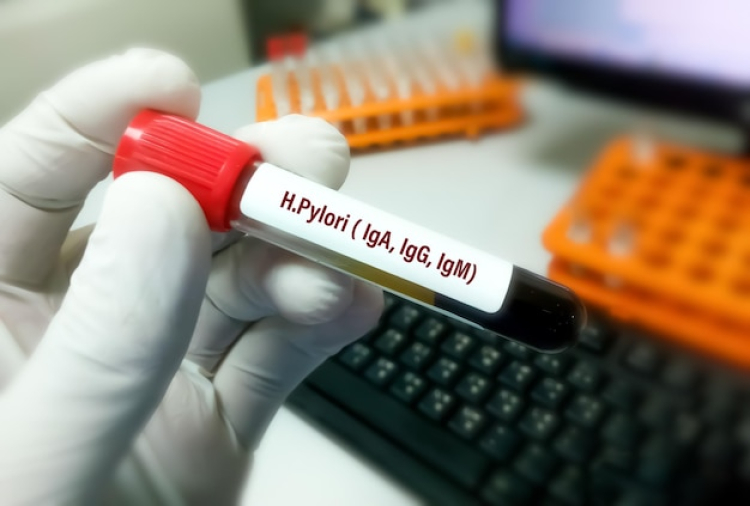
Many people assume that a simple h pylori blood test is the easiest way to go. While it is widely available, it has a significant drawback: it detects antibodies, not the bacteria itself.
The Problem with Antibodies
Your body produces antibodies to fight H. pylori, and those antibodies can stay in your bloodstream for months or even years after the bacteria are dead. This means:
Initial Diagnosis: It can tell if you’ve ever had H. pylori, but not necessarily if you have it now.
After Treatment: A h pylori blood test is virtually useless for checking if you are cured, as it will likely remain positive even if the bacteria are gone.
For this reason, Dr. Rahmani typically reserves blood testing for very specific screening scenarios and rarely uses it as a primary diagnostic tool in active clinical cases.
When Precision is Key: H. Pylori Endoscopy
Sometimes, a non-invasive test isn’t enough. If a patient has “alarm symptoms”—like unexplained weight loss, difficulty swallowing, or signs of internal bleeding—an endoscopy h pylori test becomes necessary.
During this procedure, a thin, flexible tube with a camera is passed into the stomach while the patient is under light sedation. This allows the doctor to see the health of the stomach lining directly.
Biopsy: The doctor takes a tiny tissue sample (smaller than a grain of rice).
Rapid Urease Test (CLOtest): The tissue is placed in a special gel. If it changes color, the bacteria are present.
Histology: A pathologist looks at the cells under a microscope to check for inflammation, ulcers, or early signs of cancer.
While more involved, an h pylori endoscopy is the “gold standard” for patients who need more than just a yes/no answer about the bacteria. It tells us the extent of the damage and helps Dr. Samir Rahmani tailor a more aggressive healing plan.
The Critical Rule: Preparation for Accuracy
The single most common reason for a “false negative” result (the test says you’re fine when you actually have the infection) is taking certain medications too close to the test. These drugs don’t kill the bacteria; they just “hide” them from the test.
💡What should I stop taking before my h pylori test?
To ensure the most accurate test for h pylori, you must follow these strict guidelines:
Antibiotics: Stop at least 4 weeks before testing.
Bismuth (e.g., Pepto-Bismol): Stop 4 weeks before testing.
Proton Pump Inhibitors (PPIs) (e.g., Omeprazole, Nexium): Stop at least 2 weeks before testing.
If you are in significant pain and cannot stop your PPIs, talk to your specialist. We can sometimes use H2 blockers (like Famotidine) as a bridge, as they interfere less with the results.
After the Treatment: When to Repeat the h pylori Test?
The journey doesn’t end when the last antibiotic pill is swallowed. Because H. pylori is so resilient, we must verify its disappearance.
When to repeat h pylori test after treatment?
The standard protocol is to wait at least 4 weeks after your last dose of antibiotics and at least 2 weeks after stopping your PPI. Testing any sooner can lead to a false sense of security. Dr. Samir Rahmani insists on this follow-up for every patient, as antibiotic resistance is on the rise and sometimes a second “rescue” therapy is needed.
Can I Use an H. Pylori Test at Home?
With the rise of mail-order medical kits, many ask about an h pylori home test or an h pylori test at home.
Stool Kits: These are generally reliable because you collect the sample and mail it to a certified lab for professional analysis.
Rapid “Finger-Prick” Tests: These are often antibody-based and share the same limitations as the clinical blood test.
While home kits offer convenience, they lack the clinical oversight that ensures you’ve prepared correctly. If you use a home kit and it’s positive, your next step should always be a consultation with a specialist like Dr. Rahmani to interpret the results in the context of your overall digestive health.
Closing Thoughts: Taking the Next Step
A diagnosis is the first step toward reclaiming your quality of life. Whether you choose a h pylori breath test or an h pylori stool test, the goal remains the same: clarity. Living with “maybe” is exhausting, especially when the solution is often a targeted course of treatment.
If you are ready to stop guessing and start healing, a consultation with Dr. Samir Rahmani can help you navigate these options. We don’t just look for a positive or negative result; we look at the whole picture of your health to ensure your stomach—and your life—gets back to normal.

About the author
Dr. Samir Rahmani
FRCS (England)
CCT General Surgery (UK)
MD — University of Leeds
MSc Surgery — University of Hull
27+ years experience
5,000+ procedures
Dr. Samir Rahmani is a UK-trained consultant surgeon with 27+ years of experience in bariatric, gastrointestinal, and metabolic health management. He completed advanced surgical training in the UK and previously served at Aneurin Bevan University Health Board (NHS Wales).
He holds an MD in Surgery from the University of Leeds and is JAG-accredited in GI endoscopy. Currently practicing in the UAE, he provides evidence-based guidance on weight loss treatments, including medications like Mounjaro (tirzepatide), with a focus on monitoring organ-related side effects involving the thyroid, kidneys, eyes, and liver to ensure safe and personalised care.
FAQ
The breath test helicobacter pylori protocol is very flexible. For children or those with difficulty swallowing, the urea is available as a liquid solution. It’s painless, quick, and provides results usually within 24 to 48 hours.
For non-invasive testing, the urea breath test is widely considered the most accurate. However, if you are already undergoing an endoscopy for other reasons, a biopsy is the definitive way to see exactly what is happening in the stomach tissue.
Usually, no. Most labs require you to fast (no food or water) for at least 4 to 6 hours before the h pylori breath test to ensure the urea reacts purely with the bacteria in your stomach.
Typically, once the lab receives the sample, results are available within 2 to 3 days. It is one of the faster ways to get an answer about an active infection.
If you are over 55 or have “alarm signs” like anemia or persistent vomiting, Dr. Samir Rahmani may choose an endoscopy h pylori test. This is because we need to rule out other serious conditions like stomach cancer or severe ulceration that a breath test cannot see.
The “tagged” carbon used in most modern urea breath tests (13C) is a stable, non-radioactive isotope that occurs naturally in the environment. It is perfectly safe, even for pregnant women and children.
No. A standard “full blood count” won’t show the bacteria. A specific h pylori blood test must be ordered to look for the specific IgG antibodies.
This is why expert consultation is vital. If the h pylori test is negative, your symptoms might be caused by “functional dyspepsia,” bile reflux, or even issues with the gallbladder or pancreas. Dr. Rahmani’s goal is to find the actual cause, even if it isn’t H. pylori.
Watery stool can dilute the antigen, potentially affecting the accuracy of an h pylori stool test. In cases of active diarrhea, a breath test might be a more reliable choice.
Occasional antacids (like Tums or Rolaids) generally do not interfere with the test. However, you should avoid them for at least 24 hours before the test just to be safe.
“Equivocal” or borderline results can happen if you didn’t fast long enough or if you took a PPI recently. In these cases, Dr. Samir Rahmani usually recommends waiting two weeks and repeating the test or switching to a stool test for h pylori.
Medical Disclaimer
This article is for informational purposes only and is not a substitute for professional medical advice, diagnosis, or treatment. Always seek the advice of a qualified health provider with any questions you may have regarding a medical condition.
Medically reviewed by Dr. Samir Rahmani.


