
Can H. Pylori Cause Stomach Cancer? Key Facts

Fear is a powerful motivator, but in medicine, clarity is far more effective. When patients hear the words “stomach cancer” and “bacteria” in the same sentence, the anxiety is immediate. It’s a heavy topic. However, understanding the link between Helicobacter pylori (h pylori) and gastric malignancy is less about dwelling on the “what if” and more about empowering yourself with the “what now.”
The truth is that helicobacter pylori cancer risk is a real clinical association, but it is one that develops over decades, not days. Most people with the infection will never develop cancer. Yet, because h pylori is classified as a Class I carcinogen by the World Health Organization, we cannot afford to be casual about it. Dr. Samir Rahmani often explains to his patients that while the bacteria are common, the transition from simple inflammation to a malignant state is a slow, multi-step process that we have many opportunities to interrupt.
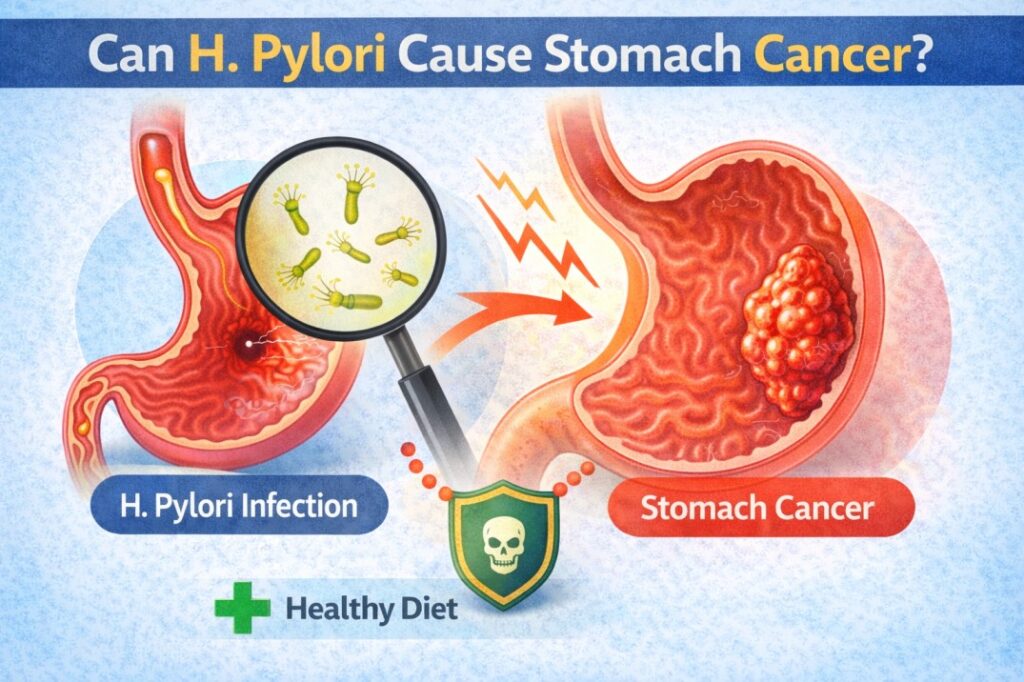
The Biological Link: How Does a Bacterium Lead to Cancer?
If you’ve found yourself searching, “can h pylori cause cancer?” you aren’t alone. It is the most common question for those dealing with a chronic, untreated h pylori infection. The connection lies in the way the bacteria interact with your stomach lining over a long period.
The Path of Chronic Inflammation
When h pylori enters the stomach, it triggers a persistent immune response. This isn’t a temporary fight like a cold; it is chronic. The bacteria burrow into the mucosal layer, causing the body to send inflammatory cells to the area. Over years—and often decades—this constant “battle” leads to a sequence of cellular changes:
Atrophic Gastritis: The thinning of the stomach lining and loss of the cells that produce essential acid.
Intestinal Metaplasia: The stomach cells begin to change their shape and function, looking more like cells from the intestines.
Dysplasia: Pre-cancerous changes in the cells where they begin to look abnormal under a microscope.
Adenocarcinoma: The development of actual stomach cancer.
So, does h pylori cause stomach cancer? Directly, it provides the environment that allows cancer to thrive. It is the persistent, low-grade damage that eventually causes the DNA in your stomach cells to mutate. This is why the “stomach cancer bacteria” label exists; the bacteria are the primary driver of this inflammatory cascade.
What Happens if H. Pylori Goes Untreated?
The progression mentioned above doesn’t happen to everyone. Genetic factors, diet, and even the specific strain of the bacteria play a role. However, what happens if h pylori goes untreated is that you remain in a high-risk state.
An untreated h pylori infection is like an ember smoldering in a dry forest. Most of the time, it just sits there. But given the right conditions—perhaps a high-salt diet, smoking, or a family history of gastric issues—that ember can catch fire. Eradicating the bacteria is essentially putting out that ember before it has the chance to spread.
💡I’ve had H. pylori for years and feel fine. Am I still at risk?
This is a common situation. Because the bacteria are so quiet, many people “feel fine” while their stomach lining is undergoing atrophic changes. Dr. Samir Rahmani emphasizes that the absence of pain does not mean the absence of risk. Screening is the only way to know the true state of your stomach lining.
Recognizing the Signs: H. Pylori Cancer Symptoms
It is vital to distinguish between the symptoms of a simple bacterial infection and the more serious h pylori stomach cancer symptoms. While they can overlap, cancer symptoms often feel more “profound” and persistent.
Common Warning Signs
Early-stage stomach cancer is notoriously difficult to detect because it often mimics a simple ulcer or mild indigestion. However, as it progresses, h pylori cancer symptoms may include:
Unexplained Weight Loss: Losing weight without trying is a major red flag.
Persistent Nausea and Vomiting: Especially if you cannot keep food down or see blood.
Early Satiety: Feeling full after just a few bites of food.
Chronic Fatigue: Often due to hidden, slow blood loss causing anemia.
Vague Abdominal Pain: A dull ache that doesn’t respond to antacids or dietary changes.
💡Is there a specific “cancer pain” that feels different?
Not necessarily. H pylori stomach cancer symptoms often feel just like a bad case of indigestion. The difference is the persistence. If you have a stomach ache that hasn’t improved in three weeks despite basic care, it’s time for more than just a home remedy.
Detection and Diagnosis: The Role of Endoscopy
If there is a concern about malignancy or pre-cancerous changes, the most powerful tool in our arsenal is the upper endoscopy.
Stage 1 Stomach Cancer Endoscopy
At stage 1 stomach cancer endoscopy findings might be very subtle—perhaps just a small area of redness, a shallow depression, or a slight irregularity in the tissue texture. This is why a highly experienced specialist like Dr. Samir Rahmani is so important. During the procedure, the doctor doesn’t just look; they take biopsies.
Biopsies allow a pathologist to look at the cells under a microscope to find those “metaplasia” or “dysplasia” changes long before a visible tumor forms. When caught at Stage 1, the survival rate is exceptionally high. The goal of screening is to catch the problem when it is still easily treatable.
Prevention: Is It Too Late to Eradicate?
One of the most encouraging findings in recent gastroenterology is that treating H. pylori can “stop the clock” on cancer risk.
Does treating H. pylori reverse the risk?
Studies suggest that eradicating the bacteria reduces the risk of developing stomach cancer by about 35% to 50%, depending on how much damage (metaplasia) has already occurred. Even if you have had the infection for a long time, removing the stomach cancer bacteria significantly lowers the chance of future malignancy.
Dr. Samir Rahmani’s Protocol for Risk Management
Dr. Rahmani doesn’t just treat the infection; he assesses the risk. For patients with a high risk—perhaps due to a family history of stomach cancer—his approach includes:
Successful Eradication: Confirming the bacteria are 100% gone with follow-up testing (breath or stool) four weeks after antibiotics.
Surveillance: In cases of advanced atrophic gastritis or metaplasia, recommending regular endoscopy check-ups to monitor the lining.
Lifestyle Counseling: Addressing the “other” factors like smoking and high-sodium diets that contribute to the risk.
A Calm Perspective on a Serious Topic
It is easy to feel a sense of doom when reading about cancer risks. But the narrative of h pylori is actually one of the great success stories of modern medicine. We have identified a primary cause of one of the world’s most common cancers, and we have a simple way to test for it and a reliable way to treat it.
Stomach cancer doesn’t happen overnight. It is the result of a long conversation between a bacterium and your body. By listening to your symptoms and working with an expert like Dr. Samir Rahmani, you are effectively ending that conversation on your terms.
You aren’t a passive bystander in your health. Eradicating the bacteria is a proactive, powerful step toward a long, healthy life. If you’ve been living with the “maybe” of a stomach infection, let this be the push you need to seek clarity. A simple test today can prevent a very difficult conversation tomorrow.
Medical Disclaimer
This article is for informational purposes only and is not a substitute for professional medical advice, diagnosis, or treatment. Always seek the advice of a qualified health provider with any questions you may have regarding a medical condition.
Medically reviewed by Dr. Samir Rahmani.
Frequently Asked Questions
Absolutely not. In fact, fewer than 3% of people with the infection will develop gastric cancer. However, since nearly all non-cardia stomach cancers are linked to the bacteria, it is considered the single most important preventable risk factor.
While children are often the ones who first contract the bacteria, stomach cancer is almost exclusively a disease of adults, usually appearing after age 50. The risk is cumulative, built over decades of untreated h pylori infection.
Nothing in medicine is 100%, but your risk drops dramatically. Some risk remains if significant damage (like intestinal metaplasia) was already present before treatment, which is why follow-up with Dr. Samir Rahmani is so important for some patients.
No. A breath test only tells us if the bacteria are present. It cannot see the state of the stomach lining. If you have “alarm symptoms” like weight loss or vomiting, an endoscopy is the only way to rule out malignancy.
Because h pylori stomach cancer symptoms often don’t appear until the cancer is more advanced. Early stages can be entirely asymptomatic or feel like minor heartburn.
Yes. High salt intake irritates the stomach lining and is thought to make the damage caused by h pylori even worse. A balanced, low-sodium diet is a key part of prevention.
When caught at stage 1 stomach cancer endoscopy intervention can lead to a 5-year survival rate of over 90%. This is why early screening for those with chronic symptoms is so vital.
It is also linked to a specific type of lymphoma called MALT lymphoma. The incredible thing about MALT lymphoma is that it can often be cured simply by treating the h pylori infection with antibiotics.
Yes. Since the bacteria are contagious and the risk for helicobacter pylori cancer can be higher in certain families, Dr. Rahmani often recommends screening for immediate family members.
Smoking is a known risk factor for stomach cancer. When combined with an h pylori infection, the risk of developing cancer increases significantly compared to either factor alone.


