
H. Pylori Diet: Foods to Eat & Avoid for Healing

When you are diagnosed with a bacterial infection in your stomach, the focus is usually on the medicine. You have your antibiotics and your acid blockers, and that’s the “engine” of your recovery. But anyone who has lived through the gnawing pain of an active infection knows that what you put on your plate matters just as much for your daily comfort. Transitioning to a specific h pylori diet isn’t just about following a rigid list of rules; it’s about making peace with your digestive system while the medication does the heavy lifting.
I often see patients who are terrified to eat anything. They’ve heard that everything from a squeeze of lemon to a dash of pepper will set their stomach on fire. On the other end of the spectrum, some hope to find foods that kill h pylori as a way to avoid antibiotics entirely. The reality lies somewhere in the middle. While no specific ingredient replaces medical eradication, the right gastritis diet can significantly dampen inflammation and speed up the repair of your mucosal lining.
In his clinical consultations, Dr. Samir Rahmani emphasizes that the goal of a stomach ulcer diet is to minimize irritation. We want to stop pouring gasoline on the fire. By choosing the right best foods for gastritis, you aren’t just managing symptoms; you are creating an internal environment where your body can finally focus on repair rather than just survival.
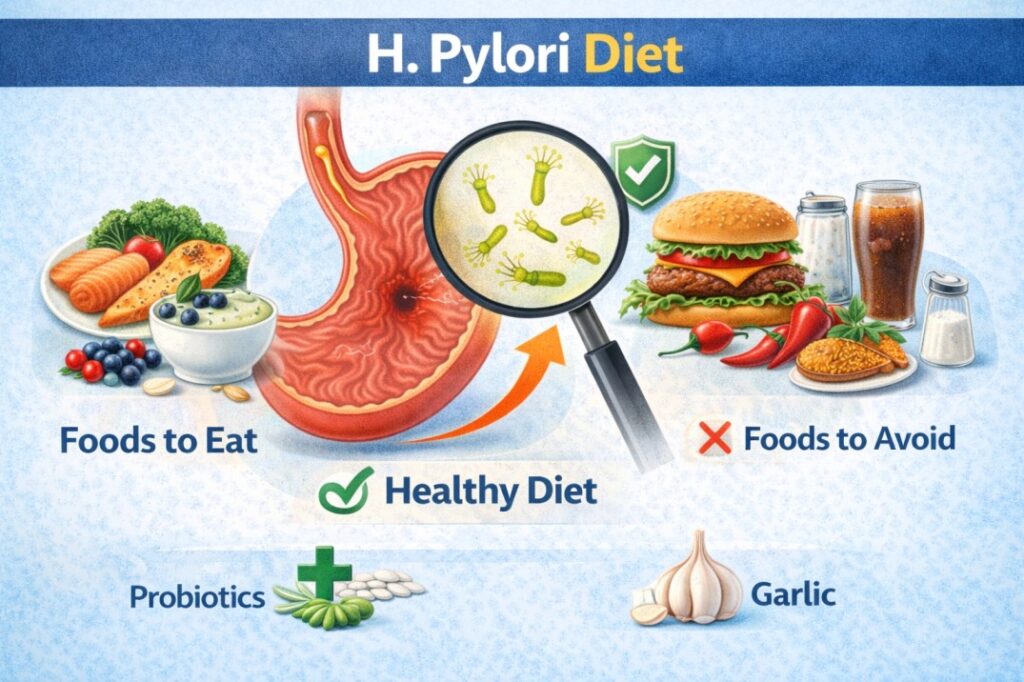
Understanding the "Why": How Food Affects the Infection
Before we dive into the ulcer diet food list, we have to understand the battleground. Helicobacter pylori burrows into the stomach lining, triggering an immune response that causes redness and swelling. This is gastritis. If the damage goes deeper, you get an ulcer.
When you eat, your stomach produces acid to break down that food. If your lining is already raw and inflamed, that acid feels like salt in a wound. Therefore, a successful h pylori diet serves two purposes: it avoids triggers that spike acid production, and it introduces nutrients that actively soothe the tissue.
Can You Kill the Bacteria with Food?
It’s a tempting thought. You’ll see articles online claiming that certain foods that kill h pylori—like garlic, honey, or broccoli sprouts—are “natural cures.” It is important to be medically honest here: while these foods have shown some antibacterial properties in a laboratory setting, they cannot reach the bacteria buried deep in your stomach lining with enough “force” to eradicate the infection on their own. However, including what foods kill h pylori (or rather, inhibit their growth) in your meals can be a brilliant supportive strategy alongside your prescription from Dr. Samir Rahmani.
What to Eat with H. Pylori: Supporting the Mucosa
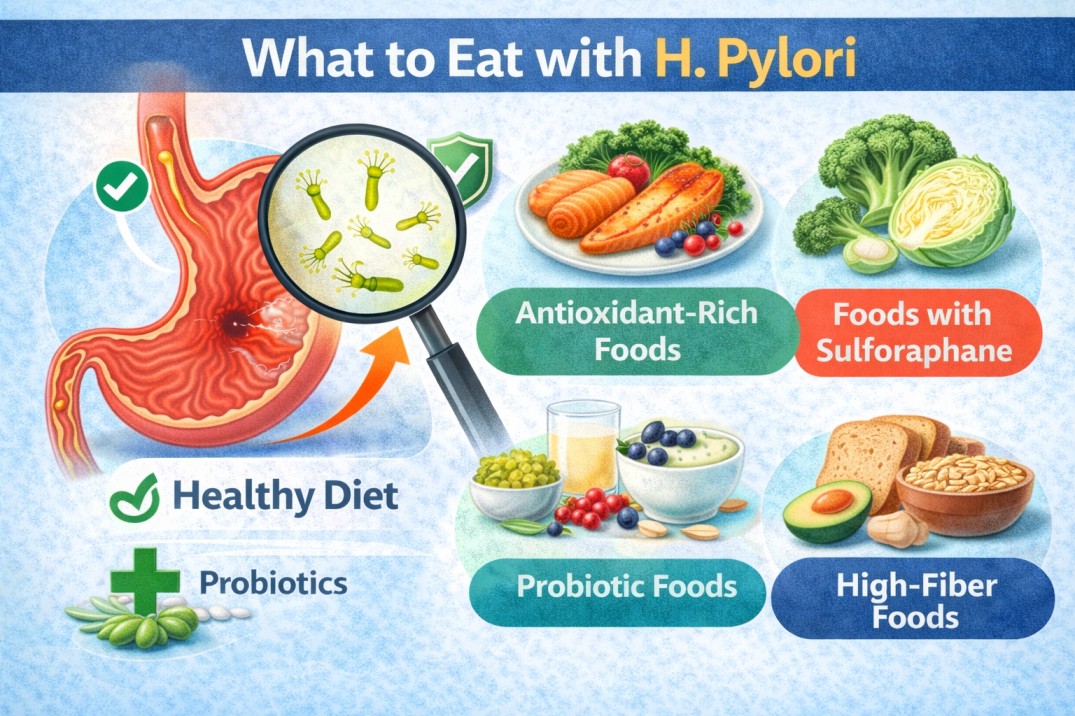
So, what to eat with h pylori? We want foods that are easy to digest, low in acid, and rich in antioxidants.
1. The Power of Sulforaphane (Broccoli Sprouts)
If there is one “superfood” for this condition, it is broccoli sprouts. They contain a compound called sulforaphane, which has been shown in clinical studies to interfere with the metabolism of the bacteria. It’s one of the few foods to eat with h pylori that actually puts the bacteria on the defensive.
2. Probiotic-Rich Foods
Antibiotics are a bit like a forest fire—they kill the “bad” H. pylori, but they also take out your “good” gut bacteria. Integrating yogurt with live cultures, kefir, or mild sauerkraut into your h pylori diet helps maintain your microbiome. This can reduce the common side effects of treatment, like diarrhea or intense bloating.
3. Lean Proteins
Think chicken breast, turkey, white fish, or eggs. These are excellent foods to eat with h pylori because they provide the amino acids necessary for tissue repair without requiring the stomach to produce excessive amounts of acid for digestion, unlike a heavy ribeye steak.
4. Berries and Colorful Veggies
Blueberries, raspberries, and strawberries are packed with polyphenols. These antioxidants help reduce the oxidative stress caused by the infection. When looking for the best foods for gastritis, think “vibrant but not acidic.”
💡Are there any foods neutralize stomach acid immediately?
If you are experiencing an acute “burn,” people often reach for milk. However, milk can actually cause a “rebound” effect where the stomach produces more acid later. Instead, reach for a small amount of ginger tea (not too hot) or a few bites of a plain banana. These act as natural buffers without the rebound risk.
Foods to Avoid with H. Pylori: Reducing the Irritation
Knowing foods to avoid with h pylori is arguably more important than knowing what to eat. Even one “wrong” meal can trigger a flare-up that lasts for days.
Spicy Scents and Flavors: Chili powder, hot sauce, and even excessive black pepper can directly irritate an open ulcer.
Caffeine and Alcohol: Both are potent stimulants for gastric acid production. If you are in the middle of a treatment cycle with Dr. Samir Rahmani, pausing your morning espresso can make a world of difference in your comfort levels.
Highly Acidic Fruits: While healthy, lemons, limes, oranges, and tomatoes can be painful for someone with active gastritis symptoms.
Processed and Fried Foods: High-fat foods sit in the stomach longer, requiring more acid and more “churning,” which can aggravate the inflamed lining.
The Gastritis and Ulcer Diet: A Structured Approach
When the infection has caused a physical sore, your stomach ulcer diet needs to be even more refined. This is often called a “Bland Diet,” but it doesn’t have to be boring.
The Ulcer Diet Food List
Grains: Oatmeal, white rice, or sourdough bread (which is often easier to digest than whole wheat during a flare).
Vegetables: Carrots, green beans, and zucchini (peeled and well-cooked).
Fats: Small amounts of olive oil or avocado. Avoid butter and heavy creams.
Practical Tips for Eating with H. Pylori
The how of eating is just as important as the what.
Smaller, Frequent Meals: Instead of three big meals, try five small ones. This prevents the stomach from becoming overly full and keeps acid levels more stable.
Chew Thoroughly: Digestion starts in the mouth. The more work you do with your teeth, the less work your stomach has to do.
Stop 3 Hours Before Bed: Going to sleep with a full stomach is a recipe for nighttime pain and acid reflux.
Stay Hydrated, but Separate: Drink water between meals rather than during them. Too much liquid during a meal can distend the stomach and trigger discomfort.
The Journey to a Healed Gut
Living with H. pylori is a test of patience. There are days when your stomach feels like it has a mind of its own. But by combining the medical expertise of a specialist like Dr. Samir Rahmani with a thoughtful, disciplined h pylori diet, you are giving your body the best possible chance to recover.
Healing isn’t an overnight event. It’s a series of small, better choices—choosing the oatmeal over the donut, the ginger tea over the soda, and the steamed fish over the fried chicken. Each of these choices is a vote for your future health.
If you are feeling lost in the “do’s and don’ts” of eating, remember that you aren’t alone. Dr. Rahmani and his team are here to help you navigate the clinical side, while these dietary shifts provide the comfort you need to get through the day. Soon enough, the “burn” will be a distant memory, and you’ll be able to enjoy the foods you love once again.
Medical Disclaimer
This article is for informational purposes only and is not a substitute for professional medical advice, diagnosis, or treatment. Always seek the advice of a qualified health provider with any questions you may have regarding a medical condition.
Medically reviewed by Dr. Samir Rahmani.
Frequently Asked Questions About the H. Pylori Diet
Ideally, no. Caffeine triggers the “gastrin” hormone, which tells your stomach to pump out more acid. If you can’t quit entirely, try switching to a low-acid, decaf version, but only after the initial “raw” feeling in your stomach has subsided.
Chocolate is a “triple threat” for gastritis: it contains caffeine, fat, and cocoa, all of which can relax the esophageal sphincter and increase acid. It’s best to avoid it during the active healing phase.
Garlic does have antibacterial properties. However, for many people, raw garlic is very irritating to an inflamed stomach. If you include it in your H. pylori diet, stick to cooked garlic in small amounts.
White bread or lightly toasted sourdough is usually fine. Avoid heavy, seedy, or high-fiber breads during a flare-up, as fiber can be abrasive against a sensitive stomach lining.
Yes. In fact, Dr. Samir Rahmani often recommends it. The probiotics in yogurt can help reduce the side effects of H. pylori antibiotics. Just eat it a few hours before or after your medication to prevent interference.
This is a common myth. Adding acid to an already inflamed stomach is generally not recommended and may worsen pain. An H. pylori diet focuses on soothing and neutral foods instead.
Yes, eggs are one of the best protein sources in an H. pylori diet. They are soft, easy to digest, and rarely cause irritation—as long as they aren’t fried in heavy oil.
Tomatoes are naturally acidic. Even when cooked into sauce, they can trigger a burning sensation in people with gastritis or ulcers.
Salt is fine in moderation. For flavor, stick to cooling herbs like parsley, cilantro, ginger, and turmeric. Avoid chili, paprika, and heavy black pepper during healing.
You should follow a strict H. pylori diet during your 14-day treatment and for at least 2–4 weeks afterward. Once Dr. Samir Rahmani confirms the infection is cleared and symptoms resolve, you can gradually reintroduce foods.


