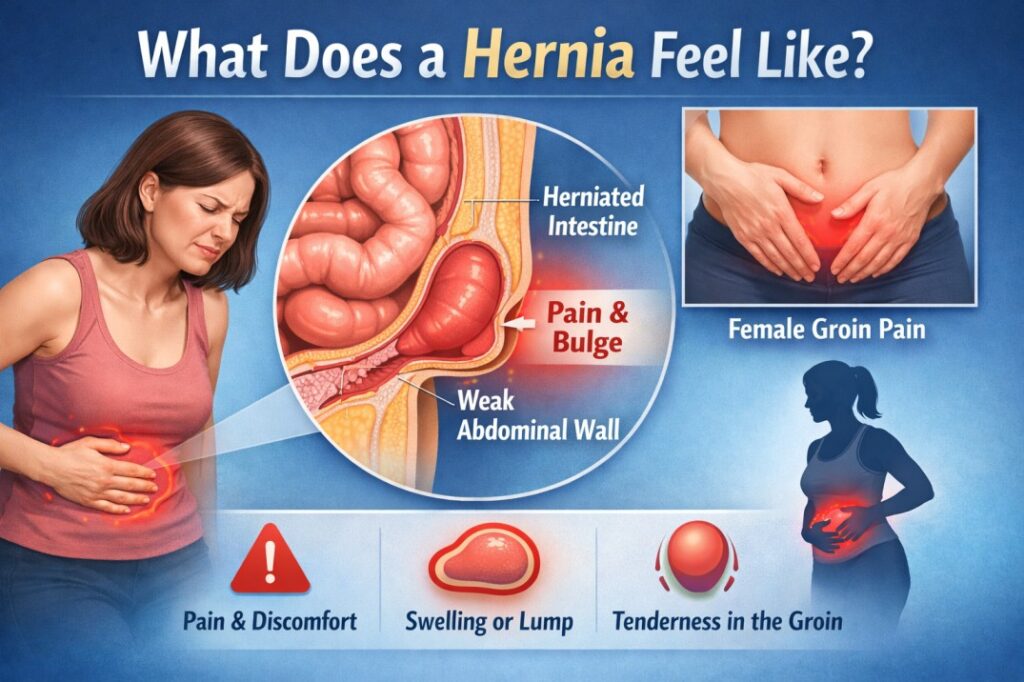
What Does a Hernia Feel Like?
By Dr. Samir Rahmani, FRCS (England), UK-Trained Laparoscopic, Bariatric & GI Surgeon, Dubai | Medically Reviewed: March 2026
What does a Hernia Feel Like? Understanding symptoms, pain & when to seek help
A hernia can feel confusing, uncomfortable, or even worrying—especially when the symptoms are subtle at first. Many people wonder what does a hernia feel like, and the answer is not always straightforward.
Hernias can cause anything from a mild dragging sensation to sharp discomfort, depending on the type, location, and severity. Some people feel pain, while others notice only a small bulge or pressure that comes and goes.
This guide is designed to help you clearly understand hernia signs and symptoms, how hernia pain may present in different parts of the body, and when it is important to seek medical advice.
Whether you are noticing early signs of hernia or dealing with ongoing discomfort, knowing what to look out for is the first step towards effective treatment and peace of mind.
Read – Symptoms of Hernia in Women
What does a hernia feel like in general?
Most people describe a hernia as a combination of pressure, discomfort, or an unusual sensation in a specific area of the body.
For some, the answer to “do hernias hurt” is yes—particularly during physical activity—while others experience little to no pain at all.
Common sensations include:
- A soft bulge that becomes more noticeable when standing, coughing, or straining
- A feeling of heaviness, pulling, or pressure
- Mild to moderate hernia pain that may worsen with movement
- Discomfort that eases when lying down
In the early stages, symptoms can be easy to ignore. These early signs of hernia are often intermittent and may not interfere with daily life, which is why hernias sometimes go untreated for long periods.
Recognising hernia signs and symptoms
Understanding hernia signs and symptoms helps you identify the problem before complications develop. While symptoms vary, several patterns are common among adults.
Typical hernia symptoms include:
- A visible or palpable lump under the skin
- Localised tenderness or aching
- Discomfort after lifting, bending, or prolonged standing
- Burning or aching sensations around the bulge
These hernia symptoms may change over time. A hernia that initially causes mild discomfort can gradually become more painful if the weakened muscle opening widens.
Hernia pain: What does it feel like and where is it located?
Hernia pain is not always sharp. In many cases, it feels dull, aching, or dragging. The intensity often depends on activity levels and body position. Understanding hernia pain location can provide important clues about the type of hernia involved.
Common hernia pain locations:
- Groin: Linked to inguinal or femoral hernias
- Abdomen: Associated with incisional or ventral hernias
- Belly button: Typical of umbilical hernias
Pain may worsen when coughing, sneezing, lifting heavy objects, or during exercise. Rest often reduces discomfort, but persistent or worsening pain should not be ignored.
How hernias feel in different body regions
Groin hernias: Men and women
Groin hernias are among the most common. People often notice a lump or swelling accompanied by pressure or discomfort. In women, hernia female groin pain can sometimes be mistaken for gynaecological or muscular issues.
For women specifically, hernia symptoms female patients report may include:
- Aching or pulling in the groin
- Pain radiating towards the hip or thigh
- Discomfort that worsens during walking or standing
Recognising the signs of a hernia in women is important, as groin hernias in females are sometimes less obvious but may carry a higher risk of complications.
Abdominal hernias
Abdominal hernias often present as a bulge along a previous surgical scar or the midline of the abdomen. The sensation is typically described as pressure or stretching.
Common features include:
- Visible swelling that increases with strain
- Mild to moderate pain after meals or activity
- A feeling of weakness in the abdominal wall
The hernia pain location here is usually central and may worsen towards the end of the day.
Umbilical (belly button) hernias
Umbilical hernias cause a bulge near the navel. Adults may experience tenderness, discomfort, or pressure, particularly when bending or lifting.
While some people feel little pain, others may notice increasing discomfort over time. These hernia signs and symptoms should always be evaluated, especially if the bulge becomes firm or painful.
Read – Types of Hernias in Females
Early signs of hernia you should not ignore
Spotting the early signs of hernia can make treatment simpler and safer. Early symptoms are often mild but consistent.
Watch for:
- A new lump that appears when standing
- Discomfort during physical exertion
- A dragging or heavy sensation
- Mild but recurring pain
At this stage, many people still ask, do hernias hurt? They may not hurt much initially, but they rarely resolve on their own and can worsen without treatment.
When hernia pain becomes serious
Not all hernia pain is harmless. Sudden or severe symptoms may indicate a complication such as incarceration or strangulation, which requires urgent medical attention.
Seek immediate help if you experience:
- Sudden, intense hernia pain
- Redness, warmth, or hardness around the bulge
- Nausea, vomiting, or fever
- Inability to push the hernia back in
These symptoms suggest restricted blood supply and should never be ignored.
Do hernias hurt all the time?
A common concern is whether hernia pain is constant. The answer varies. Many hernias cause pain only during certain activities, while others may become painful over time.
Key points to remember:
- Pain often fluctuates
- Rest may temporarily relieve discomfort
- Progressive pain usually signals worsening
If you are constantly affected by the thought “do hernias hurt”, it may be time for a professional assessment and find relief.
Read – Is it a Hernia or something else? Common Conditions with Similar Symptoms
How professional assessment helps
Accurate diagnosis is essential to confirm the type of hernia and assess risks.
A specialist can evaluate hernia symptoms, identify the exact hernia pain location, and recommend the most appropriate treatment—often before complications arise.
Modern surgical techniques allow hernias to be treated safely and effectively, often with minimally invasive approaches and faster recovery times.
Trust Dr Samir Rahmani for expert hernia care & advanced laparoscopic surgery
When it comes to understanding what does a hernia feel like and treating it effectively, expert care makes all the difference.
Dr Samir Rahmani, a UK-trained consultant laparoscopic and general surgeon in Dubai, offers internationally recognised expertise, advanced minimally invasive techniques, and truly personalised care for hernia treatment in both men and women.
Book your consultation today and find long-term relief.
Read More – What Is Hernia in Women?
Read More – What Causes Hernia in Women?
Read More – What is life after hiatal hernia surgery?
About the author
Dr. Samir Rahmani
FRCS (England)
CCT General Surgery (UK)
MD — University of Leeds
MSc Surgery — University of Hull
27+ years experience
5,000+ procedures
Dr. Samir Rahmani is a UK-trained consultant surgeon with 27+ years of experience in bariatric, gastrointestinal, and metabolic health management. He completed advanced surgical training in the UK and previously served at Aneurin Bevan University Health Board (NHS Wales).
He holds an MD in Surgery from the University of Leeds and is JAG-accredited in GI endoscopy. Currently practicing in the UAE, he provides evidence-based guidance on weight loss treatments, including medications like Mounjaro (tirzepatide), with a focus on monitoring organ-related side effects involving the thyroid, kidneys, eyes, and liver to ensure safe and personalised care.
Medical Disclaimer
This article is for informational purposes only and is not a substitute for professional medical advice, diagnosis, or treatment. Always seek the advice of a qualified health provider with any questions you may have regarding a medical condition.
Medically reviewed by Dr. Samir Rahmani.