
Is It Safe to Take Famotidine 40 mg Twice a Day
By Dr. Samir Rahmani, FRCS (England), UK-Trained Laparoscopic, Bariatric & GI Surgeon, Dubai | Medically Reviewed: March 2026
If you’ve been struggling with that burning sensation in your chest or a sour taste in your mouth that just won’t quit, you’ve likely come across a box of Pepcid or a prescription bottle labeled “Famotidine.” For most people, a single 20 mg pill does the trick. But what happens when the symptoms are stubborn? You might find yourself staring at your prescription or an over-the-counter bottle asking: Is it safe to take famotidine 40 mg twice a day?
The short answer is yes, for many people it is perfectly safe under medical supervision, but there is a lot of nuance to how your body handles that much medication. As Dr. Samir Rahmani often emphasizes to his patients, while famotidine is a remarkably safe drug, high-dose therapy should always be part of a broader, personalized treatment plan. Let’s break down everything you need to know about this specific famotidine dosage for adults, why you might need it, and what to watch out for.
What Exactly Is Famotidine?
Before we talk about the high doses, let’s look at the basics. What is famotidine? It is a medication primarily used as a stomach acid reducer. You might know it by its common brand names like Pepcid, Famocid, or Famodin. Whether you have a white pill L194 or a pill CC 61 / CC 59, they all contain the same active ingredient.
A common point of confusion is whether this drug is the same as something like Prilosec. To be clear: Is famotidine a PPI? No. It belongs to a class of drugs called an H2 receptor antagonist (H2 blocker). While both PPIs and H2 blockers reduce acid, they do it differently. Think of a PPI as a master switch that turns off the acid pumps, whereas an H2 blocker like famotidine just blocks the signal that tells the pumps to start working.
Famotidine 40 mg Tablet Uses: Why the High Dose?
Standard over-the-counter doses are usually 10 mg or 20 mg. However, famotidine prescription strength often reaches 40 mg. Taking famotidine 40 mg twice a day—which totals 80 mg in 24 hours—is usually reserved for more “aggressive” conditions.
Doctors typically prescribe this higher frequency for:
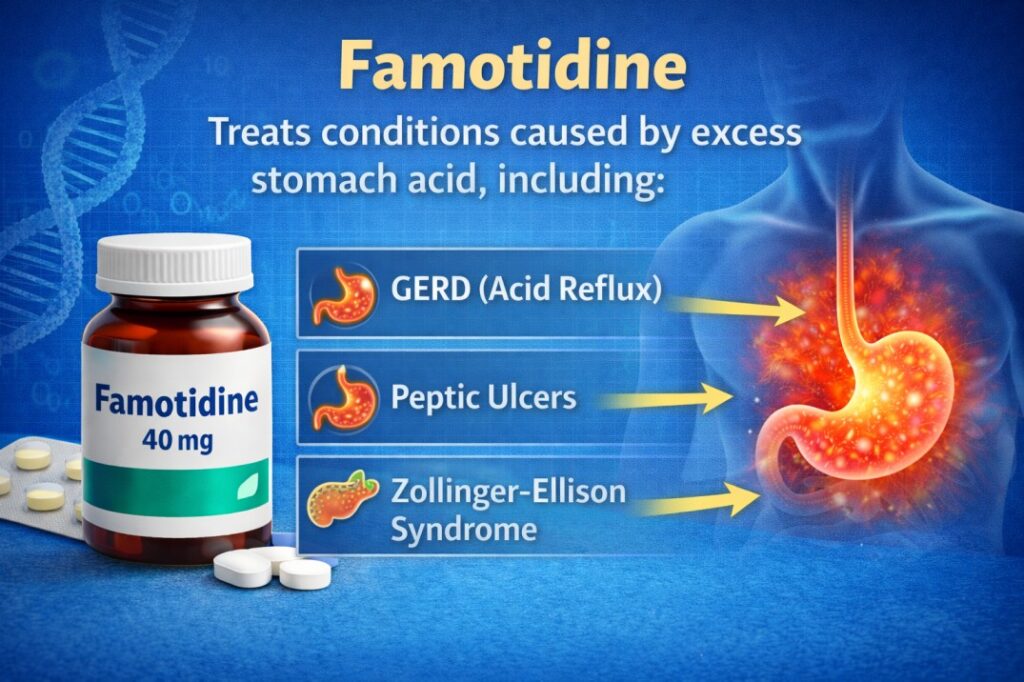
Gastroesophageal reflux disease (GERD): When standard doses don’t stop the acid from moving back into the esophagus.
Erosive esophagitis: This is when the acid has actually started to wear away the lining of your throat.
Peptic ulcer treatment: To give the stomach lining a chance to heal without being bathed in acid.
Zollinger-Ellison syndrome: A rare condition where the stomach produces massive amounts of acid.
So, is 40 mg of famotidine a lot? For a casual bout of heartburn after a spicy meal, yes. But for someone managing chronic GERD medication needs, it’s a standard therapeutic level. When you are taking famotidine 40 mg twice a day, you are essentially creating a 24-hour blockade against acid production.
How Does Famotidine Work? (The Science Bit)
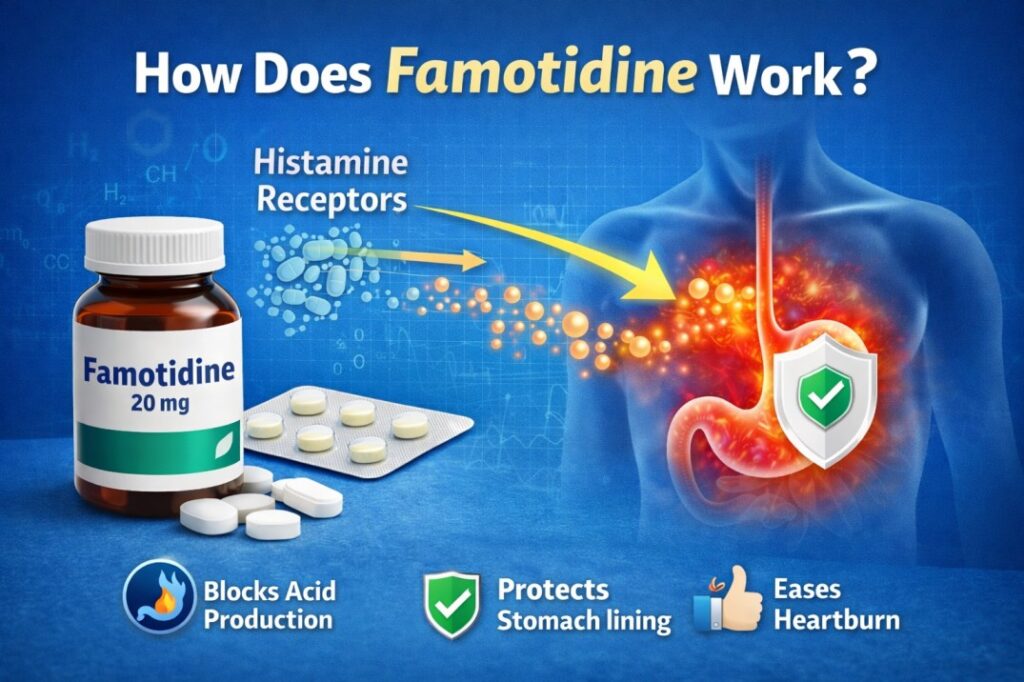
You don’t need a medical degree to understand the famotidine mechanism of action. Inside your stomach lining, there are cells called parietal cells. These cells have receptors, one of which is the Histamine-2 receptor. When histamine hits that receptor, it’s like a key turning in a lock that starts the “acid factory.”
As an H2 receptor antagonist (H2 blocker), famotidine sits on that receptor like a piece of gum in the lock. The key (histamine) can’t get in, so the acid factory stays quiet. If you’re wondering how long does it take for famotidine to work, you’ll usually feel some relief within 15 to 60 minutes. It’s faster than a PPI but slower than a liquid antacid.
Can I Take 80 mg of Famotidine a Day?
When we talk about taking 40 mg twice daily, we are talking about a total maximum dose of famotidine in 24 hours of 80 mg. For most healthy adults, the body processes this well. The kidneys filter it out, and the liver does its part, too.
However, “can I take it” and “should I take it” are different. You shouldn’t jump to this dose just because you had a bad night. This level of heartburn relief medicine should be discussed with a professional like Dr. Samir Rahmani to ensure your symptoms aren’t masking something more serious. If you have ever thought, “Can I take 80 mg of famotidine a day?” the answer is technically yes, but only if your doctor has confirmed your kidneys can handle the clearance of that volume.
The Benefit of the "Twice a Day" Schedule
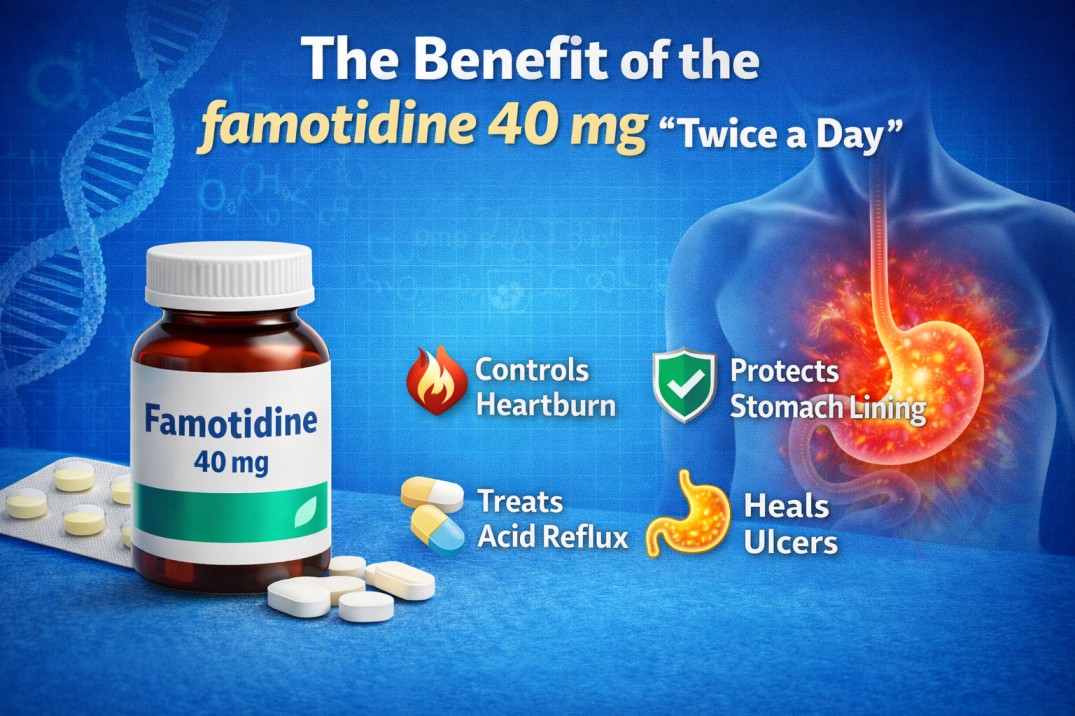
One of the biggest reasons for taking famotidine 40 mg twice a day is to prevent “nocturnal acid breakthrough.” Acid production doesn’t stop just because you’re sleeping. By splitting the dose—taking one in the morning and one at night—you maintain a steady level of the drug in your system.
If you’ve ever wondered why take famotidine at night, it’s because it provides a protective shield while you’re lying flat, which is when acid is most likely to creep up into your esophagus.
Safety, Side Effects, and What to Watch For
No medicine is without a catch. While we’ve established that it is safe to take famotidine 40 mg twice a day for most, you need to be aware of the side effects of famotidine 40 mg tablets.
Common Famotidine Side Effects:
Headaches: The most frequently reported issue.
Dizziness: Especially when moving quickly.
Does famotidine cause constipation? It can, though some people actually experience the opposite (diarrhea). It’s all about how your specific gut reacts.
Dry Mouth: A minor but annoying side effect.
Rare but Serious Concerns:
Is famotidine safe for kidneys? If you have healthy kidneys, yes. However, if you have pre-existing kidney disease, the drug can build up in your system. This is because the kidneys are the primary “exit route” for this medication. If they are sluggish, the drug lingers, which can lead to confusion, especially in elderly patients.
Can famotidine cause anxiety? While rare, some people report mood changes or “brain fog.” If you feel mentally “off” after starting a high dose, talk to your doctor.
Famotidine long-term use side effects: Taking high doses for years can sometimes lead to Vitamin B12 deficiency. Your body needs a certain amount of stomach acid to break down B12 from your food. Over time, a total lack of acid can lead to a gap in your nutrition.
Important Comparisons: Famotidine vs. Omeprazole
In the world of best medicine for acid reflux, these two are the heavyweights. The difference between Pepcid and Famotidine is non-existent (they are the same thing), but the difference between Famotidine vs. Omeprazole is huge.
Omeprazole is a PPI. It is generally stronger and lasts longer, but it also comes with more long-term baggage, like risks to bone density and potential gut infections like C. diff. Famotidine is often seen as a “middle ground”—stronger than Tums, but gentler on the system than a PPI. For many, famotidine 40 mg tablet uses provide enough relief without the complexity of a PPI’s side effect profile.
How to Take It Properly
To get the most out of your GERD medication, timing is everything.
Best time to take famotidine: Usually 30 to 60 minutes before a meal.
Famotidine on empty stomach: It’s actually preferred to take it before you eat so the medicine is already in your bloodstream by the time your stomach starts trying to produce acid for your food.
Should famotidine be taken with food? You can, but it might slightly delay how fast it starts working.
Special Populations
Pregnancy: Is pepcid safe during pregnancy? It is generally considered safe and falls under famotidine pregnancy category B. However, always run it by your OB-GYN first.
Alcohol: The famotidine and alcohol interaction isn’t usually dangerous in a “toxic” way, but alcohol is a major trigger for acid. Taking a pill to stop acid while drinking a beer is a bit like trying to bail out a boat with a hole in it.
The Role of Dr. Samir Rahmani in Digestive Health
When dealing with complex cases of reflux or obesity-related gastric issues, specialized surgical and diagnostic expertise becomes vital. Dr. Samir Rahmani is a pioneer in minimally invasive and laparoscopic techniques, specifically focused on treating weight-related issues and gastrointestinal disorders. With a PhD in Surgery from the University of Leeds and over 25 years of experience, he emphasizes that medications like famotidine are tools, but diagnostic procedures like endoscopy (which he is JAG accredited for) are often needed to ensure that high-dose medicine isn’t just a “band-aid” for a deeper problem.
High-Dose Famotidine: A Clinical Perspective
Clinical research, such as studies published in journals like PubMed, has shown that famotidine 40 mg twice daily is significantly more effective at healing severe erosive esophagitis compared to the standard 20 mg BID dose. This faster healing rate is crucial because chronic inflammation of the esophagus can lead to Barrett’s esophagus, a precursor to cancer.
However, Dr. Samir Rahmani notes that if high-dose GERD medication is required for more than 12 weeks without a “step-down” plan, a thorough surgical evaluation may be necessary to check for a hiatus hernia or other structural issues that medicine cannot fix.
Cost and Availability: A Global Comparison
One of the reasons famotidine remains a go-to stomach acid reducer is its affordability and availability across different markets. Below is a comparison table to help you understand the landscape of brand names for famotidine in 2026.
Comparison of Famotidine Brand Names & Availability
Brand Name | Active Ingredient | Strength (Common) | Type | Typical Price (Approx.) | Market Availability |
Pepcid AC | Famotidine | 10mg / 20mg | OTC | Higher | USA, Europe, UAE |
Famocid | Famotidine | 20mg / 40mg | Rx / OTC | Low | India, Global |
Famodin | Famotidine | 20mg / 40mg | Rx | Medium | Turkey, Middle East |
Zantac 360 | Famotidine | 10mg / 20mg | OTC | Medium | USA |
Topcid | Famotidine | 20mg / 40mg | Rx | Low | India, Southeast Asia |
Generic | Famotidine | 10/20/40mg | Rx / OTC | Lowest | Worldwide |
Note: Prices vary significantly based on insurance coverage and local pharmacy rates.
Final Thoughts
At the end of the day, is it safe to take famotidine 40 mg twice a day? For most people dealing with chronic acid issues, yes, it is a very effective and safe way to regain your quality of life. As a reliable stomach acid reducer, it offers a faster healing path for those with severe symptoms.
Just remember: medication is only one half of the battle. Dr. Samir Rahmani advocates for a holistic approach—managing your diet, staying upright after eating, and considering surgical options if the medicine isn’t enough. If you find you need this high dose for more than two weeks, it’s time to have a real conversation with your doctor about the root cause of your reflux.

About the author
Dr. Samir Rahmani
FRCS (England)
CCT General Surgery (UK)
MD — University of Leeds
MSc Surgery — University of Hull
27+ years experience
5,000+ procedures
Dr. Samir Rahmani is a UK-trained consultant surgeon with 27+ years of experience in bariatric, gastrointestinal, and metabolic health management. He completed advanced surgical training in the UK and previously served at Aneurin Bevan University Health Board (NHS Wales).
He holds an MD in Surgery from the University of Leeds and is JAG-accredited in GI endoscopy. Currently practicing in the UAE, he provides evidence-based guidance on weight loss treatments, including medications like Mounjaro (tirzepatide), with a focus on monitoring organ-related side effects involving the thyroid, kidneys, eyes, and liver to ensure safe and personalised care.
Frequently Asked Questions (FAQs)
While many people take this dose for months or even years, it is generally intended for short-term healing (4-8 weeks). Long-term use should be monitored by a doctor to watch for Vitamin B12 deficiency or changes in kidney function.
For most conditions, the maximum dose of famotidine in 24 hours is 80 mg (which is 40 mg taken twice). In very rare medical cases like Zollinger-Ellison syndrome, doctors might go as high as 160 mg every 6 hours, but you should never exceed 80 mg on your own.
You should begin to feel the effects of a stomach acid reducer like famotidine within 15 to 60 minutes. However, for the full “healing” effect on the esophagus, you may need to take the medication consistently for several days to allow the tissue to recover.
Is pepcid safe during pregnancy? Yes, it is typically considered one of the safer options for expectant mothers. It is listed as famotidine pregnancy category B. Always consult your doctor, as they may suggest starting with a lower dose first.
It varies. Does famotidine cause constipation? For some, yes. The change in stomach acid can slow down the digestive process. Others might experience loose stools. If these symptoms become severe, it may be time to look at an alternative GERD medication.
Generally, yes. If you have “breakthrough” pain between your morning and evening doses of famotidine, an antacid like Tums can provide immediate relief while the famotidine continues to work on the underlying acid production.
Taking 80 mg in a single dose instead of splitting it up isn’t usually recommended. It increases the risk of famotidine side effects like headache and dizziness without providing the 24-hour protection that split dosing offers.
It is considered a high dose, often referred to as famotidine prescription strength. While 10 mg or 20 mg is standard for occasional heartburn, 40 mg twice daily is the standard for treating active ulcers or severe GERD.
Technically, yes, but it’s counterproductive. Caffeine is a major trigger for the parietal cells to produce acid. If you are taking famotidine 40 mg twice a day, you are trying to turn the acid off; coffee turns it back on.
Yes, indirectly. Stomach acid is required to release Vitamin B12 from protein in food. Long-term use of high-dose stomach acid reducers can lead to low B12 levels over time, which may require monitoring via blood tests.
Medical Disclaimer
This article is for informational purposes only and is not a substitute for professional medical advice, diagnosis, or treatment. Always seek the advice of a qualified health provider with any questions you may have regarding a medical condition.
Medically reviewed by Dr. Samir Rahmani.


