
H. Pylori Treatment: Antibiotics & Recovery Guide
By Dr. Samir Rahmani, FRCS (England), UK-Trained Laparoscopic, Bariatric & GI Surgeon, Dubai | Medically Reviewed: March 2026

Finding out that a microscopic, spiral-shaped bacterium has taken up residence in your stomach lining can be an unsettling revelation. You’ve likely spent weeks or months dealing with a gnawing ache, constant bloating, or that “burning” sensation that keeps you up at night. The good news? Modern medicine has a very high success rate for h pylori treatment, provided the protocol is followed with clinical precision. But it’s not just a matter of taking a single pill and moving on. It is a strategic, multi-drug offensive designed to outsmart one of the most resilient organisms in the human body.
In my practice, I often tell patients that treating Helicobacter pylori is a bit like a tactical mission. The bacteria have spent years evolving to survive in stomach acid; therefore, our treatment for h pylori must be equally robust. Dr. Samir Rahmani frequently emphasizes that while the medication phase is intense, the reward is the long-term prevention of chronic gastritis and peptic ulcers.
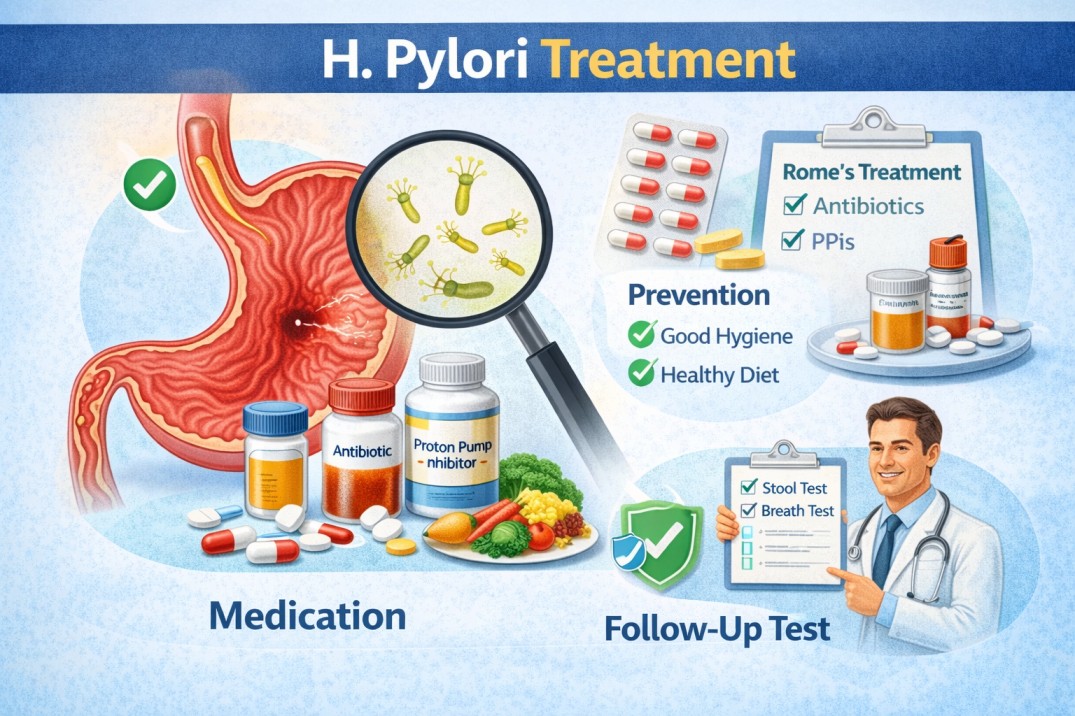
The Foundation of Eradication: Can H. Pylori Be Cured?
One of the first things patients ask during a consultation is, can h pylori be cured? The answer is a definitive yes. However, it is important to understand that the bacteria do not simply vanish on their own. People often wonder, does h pylori go away with just a healthy diet or probiotics? Unfortunately, it does not. Because the bacteria burrow deep into the mucosal lining, they are shielded from your immune system. Without professional medical intervention, the infection is typically lifelong.
The goal of clinical therapy is h pylori eradication, which means the complete removal of the bacteria from the digestive tract. This isn’t just about stopping the immediate pain; it’s about altering the environment of your stomach so the bacteria can no longer survive.
💡How long does h pylori last if I don’t treat it?
Without medicine for h pylori, the infection can last for decades. Over time, the constant inflammation can lead to the thinning of the stomach lining (atrophic gastritis) or the development of ulcers. This is why early intervention with a specialist like Dr. Samir Rahmani is so critical.
The Standard Protocol: H. Pylori Triple Therapy
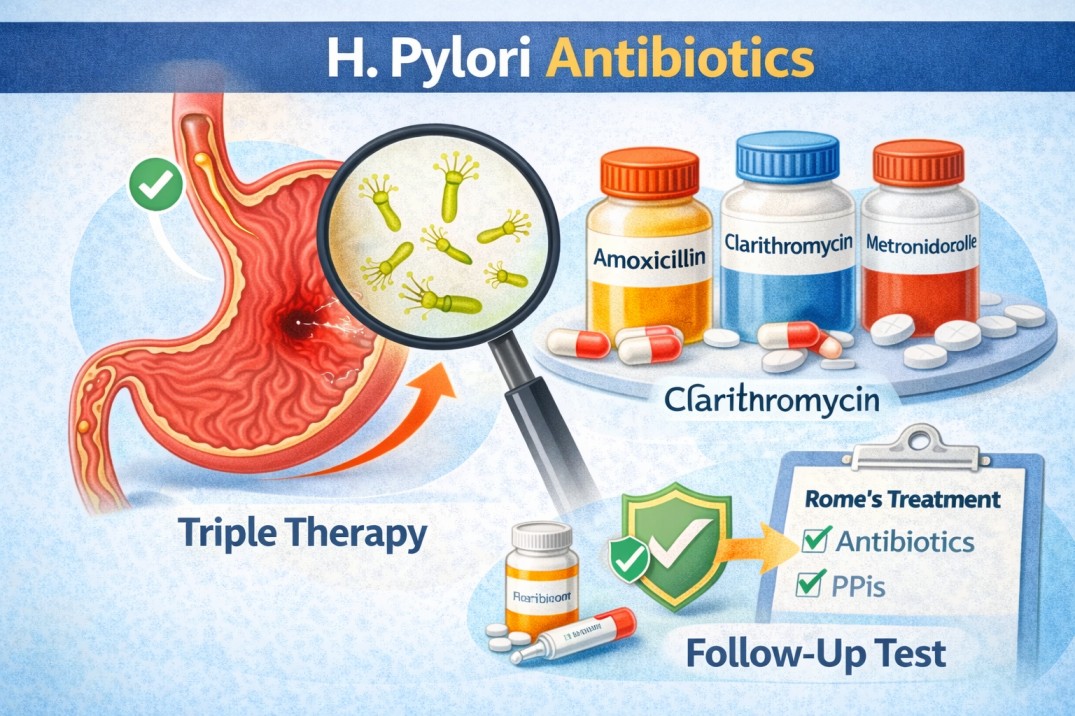
For many years, the “Gold Standard” for a first-time diagnosis has been h pylori triple therapy. As the name suggests, this involves three distinct medications working in tandem to attack the bacteria from different angles.
What is Triple Therapy for H. Pylori?
This regimen typically lasts 10 to 14 days and consists of:
A Proton Pump Inhibitor (PPI): This is the “shield.” By reducing stomach acid, it allows the stomach lining to heal and, more importantly, creates an environment where antibiotics are much more effective.
Two Antibiotics: Usually a combination like clarithromycin for h pylori and amoxicillin for h pylori.
Amoxicillin for h pylori works by attacking the cell walls of the bacteria, while clarithromycin for h pylori prevents them from producing the proteins they need to grow. By using two different h pylori antibiotics, we reduce the chance of the bacteria developing resistance.
The Choice of Medications: Understanding Your Prescription
When you look at your prescription, you might see several unfamiliar names. Understanding the role of each h pylori medication can help you stay committed to the schedule.
Proton Pump Inhibitors (PPIs)
These are not “painkillers,” but they are essential for recovery. You might be prescribed:
Omeprazole for gastritis: One of the most common and well-studied PPIs.
Pantoprazole vs Omeprazole: Both are effective, though pantoprazole is sometimes preferred if a patient is taking other medications, as it has fewer drug interactions.
Nexium vs Protonix: These are brand names for Esomeprazole and Pantoprazole. While they work similarly, Dr. Samir Rahmani may choose one over the other based on your specific history of acid reflux.
💡Is there a big difference between Protonix vs Omeprazole?
In the context of h pylori treatment, the specific brand is often less important than the dosage and timing. The goal is to keep the stomach pH high (less acidic) so the antibiotics can do their job.
Secondary Antibiotics
If a patient is allergic to penicillin, we might swap amoxicillin for metronidazole for h pylori. In cases where the initial treatment fails (which happens in about 10-15% of cases due to antibiotic resistance), we may move to “Quadruple Therapy” or use “Salvage Therapy” including medications like rifabutin. Rifabutin is a specialized antibiotic reserved for difficult-to-treat strains and is used under strict specialist supervision.
What to Expect During H. Pylori Treatment: Managing Side Effects
Let’s be honest: taking high doses of antibiotics isn’t always easy. Most treatment of h pylori infection regimens involve taking multiple pills twice a day. This intensity can lead to h pylori treatment side effects.
Commonly reported issues include:
A metallic taste in the mouth: Especially common with clarithromycin or metronidazole.
Nausea or mild abdominal cramping: As the gut microbiome shifts.
Changes in bowel habits: Diarrhea is common, which is why many doctors suggest taking a high-quality probiotic after the antibiotic course is finished.
💡Should I stop the medicine if I feel sick?
This is a critical moment in h pylori eradication. If you stop early, the strongest bacteria survive and become resistant to those drugs. If you experience side effects, contact Dr. Samir Rahmani’s team. We can often offer strategies—like taking the medication with specific foods—to help you finish the course safely.
Life After Antibiotics: The Recovery Phase
Once you swallow that final pill, the “killing” phase is over, but the “healing” phase is just beginning. Many patients ask, what to expect after h pylori treatment?
It’s important to realize that the stomach lining doesn’t repair itself overnight. Even after the bacteria are gone, the gastritis (inflammation) can linger for several weeks.
The Healing Timeline
Week 1-2 Post-Treatment: You may still feel some bloating or mild discomfort. Your gut bacteria are recalibrating.
Month 1: Most patients see a significant reduction in burning and “hunger pains.”
Month 2: This is usually when we perform a follow-up test (breath or stool) to confirm the h pylori treatment was 100% successful.
Why Dr. Samir Rahmani’s Approach is Different
Success in treating a h pylori infection depends heavily on the initial “map” created by your doctor. Dr. Samir Rahmani doesn’t believe in a “one-size-fits-all” prescription. His approach involves:
Personalized Assessment: Looking at your previous antibiotic use to avoid prescribing drugs you might already be resistant to.
Careful Monitoring: Ensuring that the PPI dosage (like omeprazole for gastritis) is high enough to actually facilitate healing.
Confirmation of Cure: We never assume the bacteria are gone. We always re-test.
Closing Thoughts: A Future Without Stomach Pain
The journey through h pylori treatment requires patience and discipline, but it is one of the most impactful things you can do for your long-term health. By committing to the h pylori medication plan and working closely with a specialist like Dr. Samir Rahmani, you are doing more than just stopping a stomach ache—you are protecting yourself from future ulcers and chronic disease.
Healing is not just about the absence of bacteria; it’s about the restoration of your quality of life. Take your medicine, listen to your body, and look forward to the day when you can enjoy a meal without fear of the “burn.”

About the author
Dr. Samir Rahmani
FRCS (England)
CCT General Surgery (UK)
MD — University of Leeds
MSc Surgery — University of Hull
27+ years experience
5,000+ procedures
Dr. Samir Rahmani is a UK-trained consultant surgeon with 27+ years of experience in bariatric, gastrointestinal, and metabolic health management. He completed advanced surgical training in the UK and previously served at Aneurin Bevan University Health Board (NHS Wales).
He holds an MD in Surgery from the University of Leeds and is JAG-accredited in GI endoscopy. Currently practicing in the UAE, he provides evidence-based guidance on weight loss treatments, including medications like Mounjaro (tirzepatide), with a focus on monitoring organ-related side effects involving the thyroid, kidneys, eyes, and liver to ensure safe and personalised care.
Frequently Asked Questions
While some foods (like honey or broccoli sprouts) have antibacterial properties in a lab, there is no clinical evidence that they can replace h pylori medication for a full cure. They are best used as a supplement to, not a replacement for, medical therapy.
The treatment itself isn’t painful, but the side effects (nausea/bloating) can be uncomfortable. Most patients find that the relief from their original stomach pain far outweighs the temporary discomfort of the antibiotics.
Historically, it was over 90%. However, due to rising antibiotic resistance globally, the success rate has dipped in some regions. This is why Dr. Samir Rahmani closely follows international protocols to decide if Triple or Quadruple therapy is best for you.
The antibiotics used for h pylori eradication are powerful and can temporarily disrupt your “good” gut bacteria. It can take a few weeks for your microbiome to balance out. Probiotics and a gentle diet can help during this window.
It is strongly advised to avoid alcohol, especially if your regimen includes metronidazole for h pylori, as the combination can cause severe nausea, vomiting, and headaches.
H. pylori is contagious. If you are cured but your spouse or children still carry it, there is a risk of re-infection. Dr. Rahmani often recommends that household members with digestive symptoms also get tested.
Don’t lose heart. If the first round doesn’t work, we use a different combination of h pylori antibiotics, such as “Bismuth Quadruple Therapy” or a regimen containing rifabutin.
During and after treatment for h pylori, it is best to avoid “triggers” like spicy foods, caffeine, and highly acidic fruits. Focus on lean proteins, cooked vegetables, and fermented foods like yogurt to support the gut.
You must wait at least 4 weeks after finishing your medicine for h pylori to have a follow-up breath or stool test. Testing any sooner can lead to a “false negative.”
Generally, no. NSAIDs like ibuprofen can irritate the stomach lining and make it harder for the gastritis to heal. Stick to paracetamol if you need pain relief, and only after consulting your doctor.
Medical Disclaimer
This article is for informational purposes only and is not a substitute for professional medical advice, diagnosis, or treatment. Always seek the advice of a qualified health provider with any questions you may have regarding a medical condition.
Medically reviewed by Dr. Samir Rahmani.


